Saturday, September 27, 2008

Top 10 Mobile Phone Screwups

Los Angeles (CA) -     Mobile phone engineering and marketing is all about compromises, but sometimes these compromises turn the phone into a very expensive paper weight.  Sure, you can’t exactly cram every feature under the known Universe into a phone, but at least give us the features that we want.

iPhone: Sealed batteries

It's remarkable that the iPhone succeeded at all with so many weaknesses, but what’s remarkable is that it managed to get away with a non-user-replaceable battery. I mean, how many phones with sealed batteries can you count? But that's not all, the iPhone battery replacement program slaps you with a $79 service fee for the replacement battery, plus $6.95 for shipping. Now you know why Apple likes iPhone batteries sealed. What's next? Cars with sealed reservoirs that can be refueled only at Shell gas stations?

Android G: No headphone jack

The first Android-powered Google phone is an excellent device at first sight. On a closer inspection, however, compromises and weird design choices start to show. We were tempted to pick G1's plasticky appearance and the aesthetics that surely won't win any beauty contest, but it is the lack of headphone jack that truly amazes us. It's beyond comprehension how collective design minds of Google, HTC and T-Mobile came to such design. It's almost as if Apple made cool new iPod with a tiny mono speaker and no headphone jack.

Blackberry Storm: I am the iPhone lookalike

The first Blackberry touch-based smartphone reminds me of Steve Ballmer in this "I am a PC!" video. Touch screams "I am an iPhone lookalike (and proud of it)" and we're sure that it will do really great e-mail. That's about it, really, thanks to practically lack of any form of marketing from Blackberry. Underselling itself is the biggest blunder of Blackberry Touch. If you want to compete with iPhone, you just don't keep your mouth shut.

Garmin Nuvifone: Another proprietary operating system

Garmin Nuvifone came out of nowhere. We admit, we are sold on the idea of the GPS focused mobile phone from a compan specialized in GPS navigation systems. Unfortunately, this indicates Nuvifone could suck as a mobile phone. Not that it is short on specifications - on the contrary - but all that hardware is useless without elegant software. Instead for choosing, for example, Android or Windows Mobile, Garmin decided to power Nuvifone with its own operating system used in their GPS gadgets. Now, everyone who has used Garmin's navigation equipment knows that it comes short of sleek graphics, smooth animation and desktop-like features. It's the software, stupid!

Motorola Z1: Kick-butt kick-slider causes back-bending

Motorola didn't learn a thing from last year's problems that plagued Z8 slider-phone. The Symbian-powered Z10 is take-two for the kick-slider concept that hinges the phone as it opens into a curved shape. And what is the reasoning behind this wizardry? It allegedly improves call quality by bringing the microphone closer to the mouth. It wasn't really necessary to tank the otherwise great handset that has excellent video recording capabilities juts for the sake of wow effect when you kick-slide it open. Do it too many times and you risk back-bending.

Nokia N96: Feature beast for geeks

Expected to arrive during the quarter, Nokia N96 is by any measure a feature monster that has it all. But top-notch hardware has no match in software and the end result is actually a concept phone that proves how much can be crammed into a handset. N96 is not perfectly balanced product, although it could have been. It is too heavy, looks bulky and if its predecessor is any indication, clunky user interface and unreliable navigation button will appeal only to geeks. If only we could have the iPhone with N96 hardware.

Nokia Tube: Boring, commodity "lifestyle" phone

Finnish mobile phone leader will bring a plethora of touch screen-based devices to the market by year's end and one of them is going to be called Tube. The device will be aimed at "volume market", which most likely means a lot of compromises. Why is it taking Nokia so long to come up with a product that can take the iPhone head-to-head? Tube is the biggest blunder because it looks like to be typical underwhelming, cheap phone aimed at average consumers who really doesn't but the lifestyle that Nokia serves in ads.

Palm Treo Pro: Tiny, narrow physical keyboard

I don't get it... With 50% of Americans with sausage fingers, Palm makes this touchscreen phone with a narrow physical QWERTY keyboard below the screen. Guys, if you bothered to make a real keyboard it's either landscape-oriented QWERTY keyboard that slides-out beneath the screen or nothing. If Treo Pro had slide-out keyboard like G1, it would have actually been much more interesting smartphone than G1 is. Bar the narrow keyboard, Treo Pro is pretty capable Windows Mobile smartphone.

Samsung Instinct: Bad marketing cripples a great product

The only iPhone challenger this summer, Instinct sells for $129 with a 2-year Sprint service contract. It's a great handset with some features that the iPhone 3G lacks, such as camcorder camera, live TV and music downloads over the cellular network and touchscreen that also works with a stylus. Instinct is also a prime example how bad marketing cripples a great product. Samsung was so confident in Instinct that it made ads that pitched key Instinct features against the iPhone, with both handsets shown side-by-side. As if providing free advertising for the iPhone wasn't enough, the ads became irrelevant when iPhone 3G came out soon thereafter, but it took Samsung weeks to remove videos from Instinct site. Next phase brought trailers and scenes from an imaginary high-tech spy movie starring Instinct, but they were later removed, too. Makes you wonder who exactly is a target customer for Instinct if not a 13-years old kid?

SonyEricsson Xperia X1: Comes too late

If SonyEricsson launched Xperia X1 this summer, it could have become a huge hit and practically the only viable challenger to the iPhone 3G. But man is this phone way too late... With G1’s release and other smartphones scheduled to arrive in the coming weeks, Xperia doesn't look so groundbreaking anymore - its mojo wore off by now. As if bad timing wasn't enough, SonyEricsson will initially launch the phone across Asia, Europe, the Middle East, Africa and Latin America, but not in the U.S. where it is expected to come possibly by year's end.

From : http://www.tgdaily.com/

Google's New Smartphone Wows Consumers, But Enterprises Must Wait

Google, T-Mobile, and htc launched the latest salvo in the smartphone wars as they unveiled the first handset to support Google's Android operating system.

The G1 smartphone, manufactured by HTC and marketed by T-Mobile, has a 3.2-inch touch display that flips out to reveal a full keyboard and trackball navigation. With Google closely involved, the G1 has tight integration with many of the search giant's offerings, including free push Gmail, wireless syncing with Google's calendar, and support for YouTube.

Mobile users hoping to use the G1 for business, however, may be disappointed by the absence of built-in Microsoft Exchange support, and neither T-Mobile nor Google is providing a desktop syncing client. "We expect it to be more for the consumer, not necessarily for enterprises," says Cole Brodman, chief technology and innovation officer at T-Mobile USA.

But if consumers like the G1, IT organizations should expect to see it pop up in the enterprise. As with the iPhone, there won't be any stopping enthusiasts.

The 4.6-by-2.1-by-0.6-inch handset, which will go on sale in the United States on Oct. 22, will let users view Word and Excel documents as well as PDFs. It also has IMAP and POP3 e-mail support, and Google execs say they expect the lack of Exchange support will soon be remedied by a third-party application.

The phone also has integrated Wi-Fi, and users can hop on to T-Mobile's expanding 3G network for mobile Web access. There's a GPS chip that can use cellular data for assisted GPS services, such as location-based searches, and a full HTML browser is built on the same technology as the recently released Chrome desktop browser. The handset has a multimedia player, preloaded with an Amazon.com application that lets users shop from more than 6 million DRM-free music tracks.

Even though it has features equivalent to Apple's iPhone, industry experts don't expect the G1 to have the same "wow" factor the iPhone had when it debuted in June 2007. The G1's $179 price is only $20 less than the iPhone's, and its $25- to $35-per-month data plans are similar.

GOOGLE'S DREAM

When Google unveiled its Android mobile software platform last November, it clearly had broader ambitions than just a Gphone. With the Linux-based platform and the creation of the Open Handset Alliance, a group of companies dedicated to building Android-based applications and devices, Google aimed to merge the openness of the Internet with the mobile market.

The Net is where Google can parlay its expertise to provide a better experience for mobile users. Google also is taking a different approach than Apple to application distribution. The Android Marketplace will have fewer restrictions than Apple's App Store. Apple preapproves all apps in its store and takes a 30% cut of any sold. Google said its Android Market will feature a YouTube-like system for publishing, distributing, and commenting on apps, and it won't take any of the revenue.

A recent study by J. Gold Associates says Research In Motion will remain the dominant player in the U.S. enterprise smartphone market, with nearly 60% in 2011. The report estimated Android will garner 4.8% of the market in three years.

Cracking the smartphone market won't be easy, as companies like RIM, Windows Mobile, Symbian, and Apple aren't going to give up share without a battle. But Google isn't one to shy away from a challenge, and its resources and partners give Android a fighting chance.

From : http://www.informationweek.com/

Microsoft deep sixes Deepfish mobile browser

I just wrote about web browser alternatives for Windows Mobile devices and then I read over at Pocket PC Thoughts that the Microsoft Deepfish web browser preview project has been cancelled. You can read all about it on the Deepfish website. If you are using it on your device now be aware that the service will be discontinued on September 31, 2008. (Wait a second Microsoft, there are only 30 days in September so are you saying that Deepfish will never be discontinued now?)

Microsoft deep sixes the Deepfish mobile browser preview project

Microsoft Live Labs folks state that the intent was to show there was a need for a better browsing experience back when the project was started in 2006 and as you can see by all the available Windows Mobile browsers I think this need has been clearly shown today. Maybe we’ll see pieces of it end up in the Windows Mobile 7 OS we have heard so many rumors about. If not, there are plenty of alternatives and also alternative mobile operating systems with outstanding web browsers.

From : http://blogs.zdnet.com/

How would you change Dell's Inspiron Mini 9?


Once we all understood that the netbook was more than just a craze to be dominated by ASUS and its Eee brand, it was inevitable that Dell would join in. Sure enough, out popped the Inspiron Mini 9, priced competitively and loaded with hardware good enough to satisfy most in the market. Now that the first wave of machines have hit doorsteps (and subsequently, office desks, airplane tray tables and bathroom ledges), we're curious to see if Dell's foray into the already crowded netbook market was a play well made. Are you happy you chose Dell's option over the others? Are you pleased with the value? Is the keyboard comfortable enough? Satisfied with the battery life? There's too much competition in this space to let someone get away with a halfhearted effort, so feel free to really spill your guts on this one.

From : http://www.engadget.com/

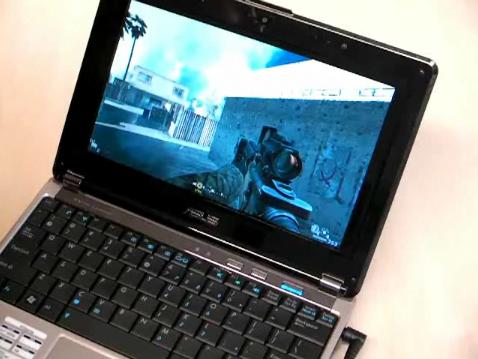
ASUS N10 tested: First netbook ’suitable for serious gaming’

ASUS’ N10 might be a netbook, but it’s certainly no Eee PC - not if your general conception of the Eee range is a basic web-surfing machine that would run out of breath even at the mention of gaming.  Mobile Computer have been putting the N10 through its paces, and one thing is clear: a netbook becomes a very different animal once you add switchable NVIDIA GeForce 9200M graphics, 2GB of RAM, a 320GB hard-drive and HDMI output.

asus_n10_netbook_gaming 

Check out the ASUS N10 gaming demo video after the cut

ASUS_N10_netbook_1

The switchable video card - the N10 has both onboard Intel 945 graphics, like other netbooks, together with the NVIDIA card, that you swap between with a reboot - means games like Call of Duty 4 play smoothly at the LCD’s native 1024 x 600 resolution (although a little tweaking to the anti-aliasing was required).  It’s also capable of handling 480p high-definition video, though reviewer Julian Prokaza had trouble with 720p.

Mobile Computer are basically calling the ASUS N10 a crossover, a blend of netbook and traditional ultraportable, and it sounds like many of the strengths of each are brought along too.  Pre-orders for the N10 are currently starting from around $600, though that climbs rapidly when you start looking at more traditional-spec models.

From : http://www.slashgear.com/

Nokia readies touch-screen iPhone rival

Nokia is reportedly preparing to launch a new touch-screen smartphone device.

According to sources cited by Reuters, the handset will be launched at a special event on 2 October in London.

Codenamed Tube, the handset will be the first touch-screen model from Nokia and will compete in the high-end market alongside the Apple iPhone and the latest models from Samsung and HTC.

Since it was first announced in early August, details on the Tube project have been few and far between.

In addition to the touch-screen capabilities, the Tube is said to feature a Wi-Fi connection and support for Java as well as DVB-H mobile TV broadcasts.

The device is also like to be the main vehicle for the Comes With Music service, Nokia's attempt to challenge Apple's iTunes in the mobile music download market.

The service was unveiled in late 2007 and was seen as one of the first strong indications that Nokia was preparing to transform from a strictly hardware manufacturer to a mobile media provider as well.

From : http://www.vnunet.com/

Nokia opens first franchise store in MENA region

SAUDI ARABIA.  Nokia, the leading mobile brand, opened its first franchise store in the Middle East and North Africa region (MENA) at Riyadh's Kingdom Mall this week.

"We will inaugurate three other such stores in Saudi Arabia's major cities such as Jeddah, Dammam, and one more in Riyadh," said Mark Kotze, Director, Nokia Branded Retail, Middle East and North Africa.

The trend in Saudi Arabia for mobile phones devices is changing with growing number of young Saudi consumers looked for advanced features such as emailing, navigation and music, he said.

He further said Nokia will open around 30 to 40 more stores across the Kingdom during the next three to four years amid huge demand. He said young Saudis look for advanced features such as 3.5G in a mobile including MMS, e-mail, Internet browsing and taking instant snapshot.

Mobile operators in Saudi Arabia have 3.5G technology which is enough to run the advanced features that Nokia has to offer, he added. "We are quite comfortable with the mobile operators in Saudi Arabia that have the capability to work with us."

The Nokia store in Riyadh that showcases a whole range of 1,600 brands is unique in terms of customers' satisfaction. Before buying a Nokia phone, the customer will have an opportunity of first-hand experience on how the latest features in a Nokia product could function, Kotze said.

"Each Nokia store in the Kingdom features a carefully-crafted retail environment ringed with state-of-the-art multimedia displays for guests to experience the components and benefits of a wide range of Nokia products and gear," he said.

From : http://www.bi-me.com/

Nintendo DS Series To Receive Animated Movies

Professor Layton is to be receiving his own animated movie which was announced last night.

Professor Layton is one of the most successful DS series to be released in both North America and Japan and last night at the Level 5 Vision Conference it was revealed he would be getting his own animated movie.'

The animated movie isn't the only one he is getting either as it was announced a while back, and reconfirmed last night, that the full length feature film featuring a real cast of actors was still on the go.

If you just happen to not know who Professor Layton then you should check out one of his many DS titles available that are puzzle titles.

From : http://www.ds-x2.com/

Star Wars: A force in sales, but ratings fizzle

LucasArts on Tuesday announced that its new Star Wars: The Force Unleashed (available for Xbox 360, PlayStation 2/3 and Nintendo Wii/DS) has become the fastest-selling Star Wars video game of all time.

After less than a week on store shelves, the "teen"-rated adventure sold more than 1.5 million copies worldwide – also making it the fastest-selling LucasArts game in the company's 26-year history. These are "sell-through" numbers, purchased by consumers, out of the 4.3 million units of The Force Unleashed sent to retailers.

The record-setting sales show "the undiminished power of Star Wars and its popularity across all media types, including video games," said Darrell Rodriguez, president of LucasArts, in a press statement. "We're blown away by the response to the game."

Interestingly, based on dozens of reviews pooled by metacritic.com at press time, the Xbox 360 version of The Force Unleashed averaged only a 7.2 out of 10 (the site works with weighted averages, giving some publications and critics more consideration than others). This isn't a very good rating for such a hyped launch, especially considering that the average score submitted by 139 gamers was 6.4 out of 10. The Nintendo Wii version of the game netted an average of just 6.9 out of 10 among pro reviewers.

While critics acknowledge the game's impressive eye candy (especially on the Xbox 360 and PlayStation 3 versions) and interesting physics (whereby all objects in the game obey real-world laws, such as gravity), many believe players are kept on too tight a leash. 007 game arriving early

Speaking of movie-related video games, Activision confirmed this week its upcoming James Bond 007: Quantum of Solace game will be available Nov. 4, 10 days before the feature film of the same name is released.

Because they're based on a similar storyline, consider this an early "spoiler warning" for those planning on seeing the flick in theatres. The game blends first-person shooting and third-person tactical combat, and borrows characters, locations and missions from both Quantum of Solace and Casino Royale, starring Daniel Craig as 007.

The "teen"-rated action game will be available for all popular platforms, including the Xbox 360, PlayStation 2/3, PC and Nintendo Wii/DS.

From : http://www.thestar.com/

Intel's Irish plant bypassed for new chips

INTEL'S IRISH plant has missed out on an investment that had been expected to see work on a new product line commence next year. Staff at its plant in Leixlip learned this week that a new line of products that the chip maker had earmarked for the plant will not now be manufactured in Ireland next year.

The Irish Times has learned that Joshua Walden, vice-president in the technology and manufacturing group at the giant American technology company, visited the Kildare plant this week and informed executives that the facility would not be required to manufacture the next family of electronic chips.

Although the Irish operations are operating at close to their full capacity, winning the 1268 product line was seen as key to strengthening Leixlip as a key Intel manufacturing facility.

Intel has 15 chip factories, or fabs, at nine locations around the world, including Arizona, California, Colorado, New Mexico, Oregon and Massachusetts in the US, two locations in Israel and the Co Kildare facility.

A spokesman for Intel confirmed that Mr Walden had been in Ireland this week, but said no decision regarding investment had been communicated to employees.

Well-placed sources said that although the decision was unlikely to mean any reduction in Intel staff numbers, it was damaging for morale at the plant.

Staff are now hoping that Leixlip will be used to produce the 1270 line of processors which is expected to go into volume production for 2011.

This would require more advanced manufacturing technology, and a larger investment, than that required to produce the 1268 range.

In September 2007, Intel announced it was seeking 200 voluntary redundancies in Leixlip as part of a global cost-cutting plan. It also emerged at that time that several hundred staff of vendors who worked on-site did not have contracts renewed.

Intel currently employs just under 5,000 staff - directly and through third parties. Two years ago, this figure was as high as 5,500.

One of Intel's older factories on the site was being "retooled" to produce the 1268 line of microprocessors.

This factory, Fab 14, is currently being cleared of machinery in preparation for the refit. Machinery is being moved to the neighbouring Fab 10.

Together these two factories, which were the first Intel built in Ireland in the late 1980s, are called Ireland Fab Operations and produce lower-end Intel products, such as flash memory and logic circuits.

Staff now expect that Fab 14 will be effectively mothballed until the new investment is forthcoming.

The Intel spokesman said that management is constantly "looking at different options" which it can present to the Intel corporation.

Although he would not confirm what, if any, preparatory work was taking place at Ireland Fab Operations, he said it produced older technology.

From : http://www.irishtimes.com/

What's new from Cupertino?

Nothing yet, but if you believe (as most do) the rumours that Apple will release new laptops and iPods this September, and you're thinking of buying a Mac, what should you do?

Sometimes shops clear their stocks of replaced models, true, when a new Mac ships. You have to be quick. If you are looking for a real bargain, sometimes shops like MagnumMac [http://www.magnummaconline.co.nz/public/] trade people's old Macs for new ones, then refurbish the traded older models and sell them with, for example, a three-month limited warranty.

Unfortunately, second-hand Macs are normally still dear unless really outmoded - especially laptops.

True, a G4 laptop is two-and-a-bit generations previous to the current Intel Apple laptops, but it's still OK for writing and email, but not much else. Some G4s are too slow to run OS 10.5 Leopard.

Or, of course, you could decide to see what the new models have to offer, and just spring for one of those. Newer is almost always better if you're brave enough to face potential first-model gremlins, and new Macs have a one-year warranty as standard.

So what is coming? I've been saying for six months that the new MacBooks will most likely become aluminium like all the other Macs except for the Mini. That metal was once so rare that Napoleon had a special aluminium knife and fork made for himself. Now it seems to be everywhere.

Well, it's light, strong and. most importantly, recyclable. It conducts heat well, and doesn't hinder wireless. But who knows? Maybe they'll be wooden like the legendary first applebox-based Apple computer built by Steve Wozniak. Or made of popcorn or paper maché ... But anything's better than polycarbonate these days, right?

Some say new MacBooks will sport a mysterious new chipset - not Intel Corp's Montevina. This will not be the primary CPU, but ... (cue X Files' music) something else.

Apparently the new MacBook Pro will have a new battery cover that spans the width of the machine, providing access to the notebook's hard disk drive. This would be good - I will happily swap a MacBook's drive but when I upgraded my MacBook Pro, I took it to the ex-MacGuide magazine's 'Dr Mac' - Patrick at the cute little Apple reseller business Übertec in Parnell.

But will redesigns of the MacBook and MacBook Pro be radical enough to warrant a special introduction by Mr Jobs?

As whatever will happen, something will happen - in the second week of September, Steve Jobs is expected to headline an 'event'.

The scope of this event remains an enigma. Somehow I don't think it will just be a family barbie at Cupertino. Internet reports have failed to pinpoint a precise agenda - will it will be a dual launch pad for Apple's next-generation Mac notebooks and iPods, or just new iPods? As there have been rumours of a new, cheaper iPod touch (if so I will be saying 'I told you so'), and even a more powerful little nano.

Whatever happens, even more gesture support in MacBook trackpads is almost a dead cert, with the advances evident in the iPhone and iPod touch. So I will jump onto a jet and fly to the Cupertino barbie to report back, OK? I'll just ask that Glenn bloke for some money ... notice how I'm telling you now, rather than later.

From : http://blogs.nzherald.co.nz/blog/mac-planet/2008/9/2/whats-new-cupertino/?c_id=5

VirtualBox revisited

WHILE looking for a way to run some Windows video software on my Linux PC last year, I stumbled upon VirtualBox, an open source program that enables you to install and use different operating systems on the same computer.

Despite the complexity such a task entails, VirtualBox—developed by a German company, Innotek—was remarkably easy to use.

Armed with the original installation CDs, I was able to quickly set up virtual machines, called “guests,” that could run Windows Vista, XP and 98 inside my Ubuntu Linux PC without much fuss. In this way, I was able to run Windows applications and switch between them and Linux programs simply by clicking on the appropriate window.

Unfortunately, the video application I wanted to run wouldn’t work inside the virtual XP machine because VirtualBox didn’t support the 3D graphics acceleration (Direct3D) that the program required.

Still, from time to time, VirtualBox proved useful when a program I wanted simply wasn’t available on Linux. For example, the virtual XP machine enabled me to run Hotspot Shield, a Windows- and Mac-only security program that incidentally also allows you to bypass country restrictions in Hulu, a Web site that offers free TV shows and movies from NBC, Fox and other media companies. It also enabled me to use Pando, a program for sending and receiving large files over the Web.

Last week, I turned to VirtualBox again because I wanted to watch the speeches at the Democratic National Convention in Denver, and the Web site that streamed the video used Microsoft’s Silverlight plug-in that works only with—surprise, surprise—Windows and Mac OS X.

When I downloaded the latest version of VirtualBox, I found that it is now owned by Sun Microsystems, which bought Innotek in February. Fortunately, the program, a 27MB download from Sun’s Web site, is still free for personal use.

Versions are available for Windows, Mac OS X, a wide variety of Linux distributions and Solaris, Sun’s Unix-based operating system.

The new version, Sun says, incorporates 2,000 improvements, including better support for Mac OS X and Solaris, seamless windowing for Solaris and Linux guests, and support for up to 32 SATA drives per virtual machine.

Unfortunately, a year after I first looked, VirtualBox still doesn’t support 3D acceleration, so it won’t be able to run most Windows games or even the eye candy on Ubuntu or Windows Vista. But recent posts on the VirtualBox blog are intriguing.

Reversing a May 2007 post that said 3D acceleration support would not be coming anytime soon, more recent messages show work has already begun on using OpenGL to emulate Direct3D. There is no indication how long it will take for this feature to appear, but the arguments for supporting 3D acceleration are compelling. VirtualBox, after all, is aimed at helping software developers create and test programs running on different operating systems, which are increasingly tapping the capabilities of 3D graphics to make computer systems easier to use. While some may dismiss this as eye candy, these features are not necessarily trivial. For example, the fancy scale effect on Compiz, which displays all active windows on a single screen in Linux, makes it much easier to handle multiple applications.

Giving guest systems the ability to run 3D-accelerated programs—including games—will also make it easier to migrate Windows users to Linux.

A tougher nut to crack might be how to get Mac OS X running in a virtual machine inside a Linux or Windows PC. In this case, the technical challenges would be complicated by legal questions, since Apple’s software licenses prohibit installing the operating system on non-Apple hardware. Still, I wouldn’t be surprised if somebody finds a way to do this one of these days. After all, with more than 5 million downloads and counting, somebody’s bound to be working on that—just for the heck of it.

In the meantime, I decided I’d give the newest version a spin, installing it on both my Linux desktop and my Macbook. Since I had no interest in installing Vista again—I did that last year—I tried OpenSolaris this time around. The operating system ran—albeit a little sluggishly—on my Ubuntu PC. On the Macbook, I installed Ubuntu without a problem. Now, on the notebook at least, I have the best of both worlds.

http://virtualbox.org/

From : http://www.manilastandardtoday.com/?page=business6_sept2_2008

Different phones for different folks

EDMONTON - Is a touch cellphone for you?

Following Apple's hugely successful launch of its second-generation iPhone 3G, other big-name cellphone makers have introduced their own versions of touch phones. Touch phones have fewer buttons - usually just a power button and volume control - and rely on larger, touch-sensitive screens to run the phone's functions. This includes a touch keypad for dialing and typing, program navigation and Internet browsing.

I have been using the iPhone from Rogers, the HTC Diamond from Telus and the Samsung Instinct from Bell. Although all are considered touch phones, they are designed differently, in size and function. They have different operating systems but feature similar multimedia functions for songs, pictures and videos, as well as offering GPS, Bluetooth, speakerphones and onboard digital cameras. Their larger screens offer a richer Internet experience than smaller conventional cellphones.

These phones are media hungry and can quickly rack up big data charges. Make sure you get a data plan to keep your monthly billing low.

All companies offer a variety of data plans, including student rates, that allow variable e-mail and browsing combinations starting from $10 on top of your voice plan.

Deciding on the right one is not easy. "Today consumers should spend some time and find out what they want to do with their next cellphone before they buy," said Greg Milligan from Microsoft Canada Windows Mobile.

If you are a casual typist, with several e-mails a day and occasional texting, touch phones will do the job. If you type several hundred words a day and send thousands of text messages a month, look into phones with a built-in keyboard.

Touch-screen phones are easier and faster to use than traditional navigation buttons. All feature oversize batteries to keep their larger screens running as long as regular phones, and all can run multiple applications at once.

Here's my take on these finely engineered phones.

- Apple iPhone 3G, from Rogers, from $199 on a three-year plan:

This is the bulkiest cellphone with the largest screen. Its programs resemble Mac computers and iPod music players. It is the easiest touch phone to use, with the largest screen buttons and unique two-finger sliding that easily enlarges or shrinks web pages and pictures.

Browsing, unquestionably, is the best of any phone. It uses Rogers' 3G network, which works up to four times faster on sites like YouTube. A typical video started playing in less than 10 seconds and with twice the quality of the other two phones. It also includes WiFi, which enables you to access your home or an Internet hotspot for free.

The iPhone lets you set up Microsoft Exchange, mobileme, Gmail, Yahoo! and AOL, but Hotmail takes extra work using third-party online programs. The online iTunes Store experience is still the best and easiest to learn and use.

I would have liked larger onscreen keyboard buttons. My fingers kept missing the right letter. The easily accessible online App Store offers countless programs costing little or nothing to download.

It's as slick as the iTune store. It has a digital camera only; the others also shoot video.

- Samsung's Instinct, from Bell, $129.95 with three-year plan:

This is probably the closest challenger to the iPhone, although in some aspects it's still a distant second.

The phone is longer and narrower than the iPhone, but its wide screen is smaller, and the full computer-like HTML Internet experience can't match the iPhone's. But it has a better-designed, larger, full qwerty onscreen horizontal keyboard that works better than the iPhone's.

The screen vibrates when your finger touches it, and that makes for a more confident experience.

It also accepts optional external Micro SD cards (now getting to 8-GB size) compared with the iPhone's included internal 8- and 16-GB models.

It includes three essential touch buttons off the screen that work well with the screen's touch functions.

I liked the easy-to-use menu similar to the iPhone's, especially the "Fun" button, which takes you to a rich multimedia experience including live TV.

Despite its clean look, the proprietary Samsung operating system does not offer the third-party software experience of the iPhone and HTC Diamond Windows Mobile phones. Bell has a full-blown online music service but it's no match for iTunes. Oddly, it has Windows Live Messenger and Live Hotmail, which made me happy. It also comes with a stylus, but nowhere to store it.

- HTC Touch Diamond from Telus, $149.99 with a three year contract:

The phone's Microsoft Mobile 6.1 OS offers a mini-Windows experience. It's the smallest of the three phones, the slowest to respond and the warmest in your pocket. It has the best 3.2-megapixel digital camera, is EVDO-capable for fast Internet and has four GB of memory built-in, a good start, as well as an external Micro SD slot.

Unfortunately, the smaller screen accommodates a cellphone-like keypad that shares two letters on each screen button, so typing speed is diminished.

The phone has four push buttons and a four-way centre push navigation wheel, which essentially does what the touch screen does. It's strange to have an older analogue-style navigation wheel on what could have been a larger touch screen on the same-size phone. The magnetically stored stylus helps.

Still, the screen is the sharpest in this group and the mobile browser is second only to the iPhone's. There are more than 22,000 Windows Mobile applications you can download. The included Teeter game shows off the phone's ability to sense its screen orientation.

- In summary, if you love iPods and want the best browsing, go iPhone. If typing is your thing, go Instinct, and if you want a Windows-like experience with Office programs in a small, highest-quality touch screen, go HTC Touch Diamond.

From : http://nbbusinessjournal.canadaeast.com/front/article/402197

Google browser: First look

Indiatimes Infotech

Internet search giant Google has finally made its much-rumoured entry in the browser space. After the latest releases by Mozilla (Firefox 3) and Microsoft (IE 8 beta 2), here comes Google browser Chrome.

Designed to better handle video-rich or other complex Web programmes, Chrome poses a tough challenge to browsers designed originally to handle text and graphics. Google calls the move "a fresh take on the browser" and said that it will be introducing a public trial for Microsoft Corp Windows users starting September 2.

The software, which is in beta, will be distributed for free to PC users in over 100 countries via Google's blog. The Internet search leader is also working on versions for Apple Macintosh and Linux users.

Here's looking into what all the Google browser packs.

From : http://infotech.indiatimes.com/quickiearticleshow/3435442.cms