Monday, November 17, 2008

Microsoft Makes Georgian Interface Vista Offer

The FINANCIAL -- Microsoft
Corporation has decided to increase its investments in Georgia and is
offering a Georgian version of Vista. The company has also signed a
memorandum on a five year project with the Ministry of Education and
Science of Georgia (MES).


“Since 2007 we’ve increased our sales significantly which in total equaled USD 4,000,000. Microsoft has invested more than USD 500,000 in Georgia and is going to invest more.”, Zurab Munjishvili, the official representative of Microsoft in Georgia, told The FINANCIAL.


“We see that the demand for licensed versions is growing in Georgia and
more corporate clients are seeking our products. Our new project will
be part of a long-term campaign in Georgia designed to foster IT
education,” Munjishvili said.


“If two years ago 99% on the Georgian software market was illegal,
now this number has decreased dramatically. The amount of our users
(Vista’s users) is over 25% of total licensed users in Georgia”


“Among our biggest clients are Bank of Georgia
, the Ministry of Finance of Georgia, Ministry of Education and Science
of Georgia (MES). Over the last 2 years the number of licensed software
users has been increasing in Georgia. For this reason Microsoft Corporation is increasing its investments here,” said Mr. Munjishvili


You can run Vista on Mac too.


“Vista does run on Macs along with Mac”, explains Nata Davitashvili, CEO of Hamaki, CEO of the Apple Authorized Dealer.


“OS X Leopard using Apple’s Boot Camp technology with no difficulties
whatsoever. Certainly, there are numerous problems involved in running
Vista on any platform, Macs are no exception. However, Vista runs on
Macs as well as PCs with no considerable difference. Apple has given
its users the ability to compare side by side its own operating system
to Microsoft ’s. This comparison turns in favor of Apple in an overwhelming majority of cases,” commented Davitashvili.


“We do not view Microsoft
as a competitor at this point”, continued the CEO of the Apple
Authorized Dealer. ”My personal opinion is that localized products are
never as successful as the original ones. I don't think localized Vista
will be popular in Georgia,”


Windows Vista contains many changes and new features, including an
updated graphical user interface and visual style dubbed Windows Aero,
improved searching features, new multimedia creation tools such as
Windows DVD Maker, and redesigned networking, audio, print, and display
sub-systems. Vista also aims to increase the level of communication
between machines on a home network.


Microsoft’s primary stated objective with Windows Vista, however,
has been to improve the state of security in the Windows operating
system. One common criticism of Windows XP and its predecessors has
been their commonly exploited security vulnerabilities and overall
susceptibility to viruses and buffer overflows.


Criticism of Windows Vista has targeted high system requirements,
its more restrictive licensing terms, the inclusion of a number of new
digital rights management technologies aimed at restricting the copying
of protected digital media, lack of compatibility with certain
pre-Vista hardware and software, and the number of authorization
prompts for User Account Control.


”The Georgian interface will make it much easier to use the product
and master special features of Vista,” said Zurab Munjishvili.


The whole project lasted 3 years and entailed the translation of
glossary, the phrases, grammatical analysis of office programmes and
testing the Beta version.


Microsoft’s General Manager in CEE (Central and Eastern Europe),
Veronica Prikrylova took part in the presentation of  Georgian Windows
Vista, which was translated and localized by  UGT, the leading IT
infrastructure solutions provider in Georgia.


“Taking into consideration the Georgian Legislation on Georgian language, Microsoft Corporation is committed to create Vista’s and Microsoft Office 2007’s Georgian interface. This project of localization is Microsoft
’s investment in the Georgian market. I want to thank our partner UGT
for the successful and brilliant implementation of the project,” said
Veronica Prikrylova, Microsoft ’s General Manager in CEE.


Microsoft signed a memorandum with the Ministry of Education and
Science of Georgia on the social project “Partner in Learning”. This
project entails conducting trainings for teachers, creating portals,
and data localization. All the costs will be covered by Microsoft .


According to Mr. Zurab Munjishvili today 50-70% of windows users in CEE
use Windows Vista. Georgian Vista has cost the company tens of
thousands of USD. Munjishvili added that as it’s a language interface
programme, it will be free for download.


“Apple business in Georgia has grown exponentially over the past 2
years and we are very optimistic about its future in Georgia,” said the
CEO of the Apple Authorized Dealer.


Apple posted its fourth quarter’s results revenue of USD 7.9 billion
and net quarterly profit of USD 1.14 billion, or USD 1.26 per diluted
share. These results compare to revenue of USD 6.22 billion and net
quarterly profit of USD 904 million, or USD 1.01 per diluted share, in
the year-ago quarter. Gross margin was 34.7 percent, up from 33.6
percent in the year-ago quarter. International sales accounted for 41
percent of the quarter’s revenue.

Source : http://finchannel.com/

Next-generation processors arrive, bit by bit

The
innards of the humble personal computer are getting one of the most
significant upgrades in nearly two decades, but you probably don't know
about it and might not notice any difference for years to come.

The
change is to 64-bit computing. Nearly all computers sold in the past
couple of years have 64-bit chips in them, replacing older 32-bit
processors, but only now are a significant number of systems including
software that will take advantage of the new chips.

The makeover
allows computers to tap into an exponentially greater amount of memory
than older machines and potentially to run more programs faster. That's
important if you edit video or work with uncompressed digital
photographs or other large files. It also can be important for gamers
who want to fully access the memory capacity built into their graphics
cards. But with few consumers exploiting the capabilities of their
current computers, most haven't noticed the change.

"The average
consumer will not see a lot of benefit in the short term," said
Microsoft's Gary Schare, who works with makers of consumer PCs. "What
they're really getting is a future-proof system."

The number of
bits ascribed to a chip determines how much data the processor can
handle at any one time. The more bits, the more data.

The number
of bits also determines how much memory the chip can utilize. A 32-bit
chip can typically use no more than 4 gigabytes of memory, while a
64-bit chip can

theoretically recognize 17 billion gigabytes of memory.

Despite
the benefits, the computer industry has bumped up the number of bits in
PC processors infrequently. In part, that's because there hasn't been a
need. Also, the move to larger bit processors requires a massive effort
by the industry to rewrite operating systems, applications and hardware
drivers to fully harness the new chips.

The last big shift — the
move from 16-bit to 32-bit computing in the late 1980s to early '90s —
paved the way for today's multi-tasking and graphically rich computers.
But it took nearly 10 years to complete.

AMD introduced the first
widely used 64-bit PC processors in 2003 and since then, those chips
have come to dominate the industry. But few computers have had the
software necessary to take advantage of the 64-bit chips.

That's starting change.

More
than 22 percent of all the PCs sold in the U.S. last month that had
Windows Vista installed were running the 64-bit version of the
software, according to Microsoft. And about 40 percent of the PCs for
sale at Best Buy these days come with 64-bit Windows Vista.

If
you're out shopping for a PC this holiday season, you may notice this
change. Some retailers are highlighting the inclusion of the "64-bit"
edition of Windows Vista on particular PCs. Others are taking a more
subtle approach, touting PCs with 4 gigabytes or more memory; such
machines will typically include 64-bit Windows Vista because the
regular edition can't access that much memory.

Typically, Windows
consumers won't pay a premium just for the 64-bit version of the
operating system. For now, the software mostly comes on higher-end
systems.

Apple's Macintosh computers use the same 64-bit chips
that run in Windows machines, and the Macintosh operating system has
been tweaked to utilize them. But the only Macs so far that take
advantage of the extra memory capabilities of the chips are the
company's high-end Mac Pros and Xserve servers.

PC users who
multi-task could also see a benefit because 64-bit Windows can allocate
more memory to more programs at the same time, making it easier and
quicker for users to switch back and forth between them.

Consumers
will increasingly appreciate those benefits, said John Taylor, a
spokesman for AMD, which pioneered the 64-bit PC chip market with its
Athlon processors.

"A lot of things we like to do today are memory-intensive," Taylor said.

So far, though, few consumers seem aware of the advantages of a 64-bit system.

San
Jose resident Dave Wright, who was shopping for a computer at Best Buy
last week, had heard the term "64 bits," but wasn't aware of what it
meant or why he should care about it.

"You've literally got a rookie here," he said, noting this was the first time he'd bought a PC for himself.

Analysts
say there's little reason why consumers like Wright should care about
64-bit computers right now because the average consumer doesn't fully
utilize the current capacities of their PCs. General Web surfing, word
processing and e-mailing don't require all that much processor power or
memory capacity.

"I don't think most users feel constrained by
32-bit systems," said Roger Kay, founder and president of Endpoint
Technologies, a technology industry market research firm.

Benefits aside, there can be some drawbacks in moving to a 64-bit system.

Some
software won't work on a 64-bit system. Certain older programs just
aren't compatible. And some programs closely integrated into the
operating system, such as anti-virus software, need to run in the same
bit flavor as the operating system.

Also, many older peripherals
like printers and scanners that worked fine with a Windows XP computer
may be unusable with a 64-bit Windows Vista one.

That said, the
industry is pushing 64-bit computing and PC buyers will most likely
soon have little choice but to get a 64-bit system, analysts note.

"Sixty-four-bit
emerged as a marketing vehicle for (PC manufacturers)," said Al Gillen,
a software analyst with IDC, an industry research firm. "At some level,
people are being sold a car that can do 200 miles per hour, when most
of the time they're doing 45 miles per hour in traffic."

Source : http://www.mercurynews.com/

IT pros reveal why they're skipping Vista and sticking with Windows XP

Despite warnings to businesses about the dangers of skipping Windows
Vista, many IT managers and CIOs are standing firm that the risks of
migrating to Vista outweigh the benefits.

The recent press coverage regardingperformance efficiencies seen in the Windows 7 pre-beta (delivered at Microsoft's recent Professional Developers Conference) has dimmed the spotlight on Vista a bit.


Also, Vista sales have fallen short of expectations lately: For the
fiscal first quarter of 2009, Microsoft's Windows client division
revenue increased a mere 2 percent in year-over-year growth, while
operating income dropped by 4 percent.


Mike Nash, corporate VP of Windows product management, was asked
recently if he expects users to bypass Vista and wait for Windows 7.


He referenced the progress made in Vista SP1, but added that "customers are going to make their own decisions."


Yes, they are. Whether they are spitefully, wholeheartedly skipping
Vista or doing it for straightforward budgetary reasons, the decision
on what to do (or not to do) with Vista still weighs heavy on the minds
of IT managers.


IT pros and CIOs we talked to for this story have some old concerns
regarding Vista, starting with its ROI, and some new ones, such as how
they'd handle a Vista upgrade for users who've now decided based on
months of negative publicity that Vista's a bad choice.


What they have in common is clear: They're sticking with XP, at least until Windows 7 arrives.


XP Works Just Fine, Thank You


The old expression, "If it ain't broke, don't fix it", rings true
for IT managers. Many do not see enough demand for Vista at their
companies and XP is giving them everything they need. To upgrade would
be to unnecessarily complicate their infrastructures, they say.


John Halamka, CIO of Harvard Medical School, says he has not been
able to justify upgrading to Vista for his user population of doctors
and nurses, citing the PC hardware requirements of Vista and the
stability of XP.

Source : http://www.itbusiness.ca/

ASUS new Eee PC XP 16GB: faster SSD, better battery

More speedy ASUS hardware now, with the Eee PC 901 getting a performance boost
thanks to a new SSD and improved battery.  Currently on sale in France,
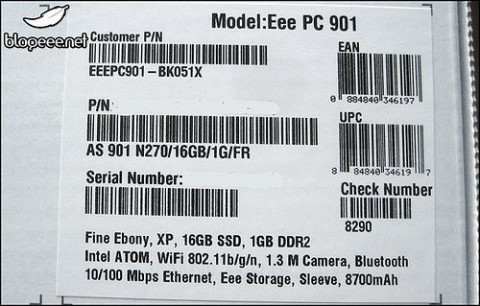
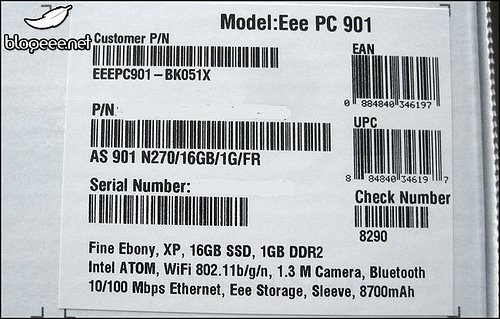
the Eee PC 901 XP 16GB (model code BK051X) has a new embedded SSD
controller and uses a faster, single volume 16GB drive.  It also has a
new Panasonic battery which, despite only having 3-cells, still manages
to pack 8700mAh compared to the normal 3-cell 6600mAh Eee PC battery.


asus_eee_pc_901_16gb_xp_1-480x306


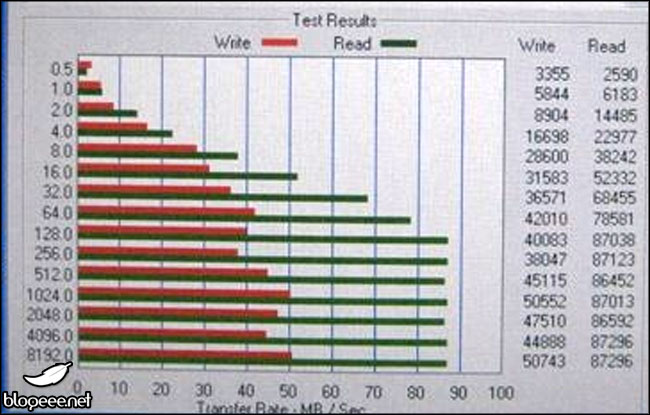
The improved storage arrangement means up to 50MB/sec write speeds
and 87MB/sec read speeds, comfortably besting other SSD netbooks.  As
for battery life, it’s already being predicted to give 7 to 8hrs normal
use (i.e. with wireless switched on).


No word on whether this new Eee PC is a France-only product, but it
seems hard to believe that ASUS would develop something so impressive
and then limit it to just one market.  Nor is it clear whether ASUS
will leave it as Windows XP only, or offer a Linux version.


[via jkkmobile]

Microsoft Helped Intel With Lower "Vista Capable" Specs

It seems that Microsoft had dropped the requirements of its
controversial Microsoft Windows Vista capable program, in order to help
Intel to sell older versions of chipsets that were unable to meet the
OEM requirements, according to recently released court documents. 


The software giant is facing a lawsuit from the customers who
complained that the computers with ‘Vista capable’ labels were only
able to support the ‘Windows Vista Basic’ version of the operating
system. 


The unsealed court documents purported that Microsoft has lowered
the requirements from Vista capable scheme, so that PCs with older
Intel 915 chipsets which were unable to support Windows Device Driver
Model (WDDM) could still qualify as Windows capable machines.  


The documents seemed to suggest that the company was planning to bar
PCs with Intel’s erstwhile 915 chipsets from the plan, as they weren’t
competent enough to support Vista’s Aero Glass graphics; however it
buckled under pressure from Intel. 


In addition Intel urged Microsoft to postpone the launch of its
Windows Vista sticker program from April to the originally scheduled
date of June, so that it could get some more time to develop high-end
chips to meet the market requirements. 


It is interesting to note that Intel’s top exec James Renee sent an
email to Microsoft’s Will Poole, expressing his concerns over the
unfavourable impact of Microsoft’s “Vista-capable” program on the chip
maker.   


Court fillings also mention that Paul Otellini, the CEO of Intel,
had in fact appealed directly to Microsoft’s chief Steve Ballmer,
saying the program could result in billions of dollars revenue loss for
the company.

Source : http://www.itproportal.com/