Saturday, November 22, 2008

How good is the Intel i7 CPU?

I have been testing all three i7 chips for the past week on an Intel-provided DX58SO Express Chipset motherboard.


For enthusiasts, I used 3GB of QIMONDA 3 x 1GB DDR3 1067 RAM and a Thermalright Ultra-120 eXtreme RT CPU cooling fan. I used my previous Windows XP and Vista hard drives and the NVIDIA GTX 8800 graphics card and compared my computer's overall performance against Intel's previous hottest CPU, the Core 2 Extreme Processor QX9770, also running at 3.2 GHz like the new i7 Extreme 965. The QX9770, generally not available in stores, was running on a X48-based Asus motherboard.


A few extra features on the X58 motherboard include the ability for it to easily run ATI CrossFire dual graphics cards as well as NVIDIA SLI dual cards. The Extreme CPU's advantage, over the slower 920 and 940 i7 CPUs, besides a 50 per cent faster 6.4 Gigatransfers (billion transfers of data per second), is that it comes  unlocked and can be over-clocked until is simply stops running. Sweet! Overclocking tests were not done here.


Although I ran most my tests on the top new i7 chip, online reviews have verified that the slower and cheaper i7 940 and 920 ran about 8 and 16 per cent slower than the i7 965 CPU, mentioned below.


Which was faster, the now older QX9770 or the new i7 965?


Despite the i7's smaller cache - 8 MB versus 12 MB, slower internal BUS speed - 1066 MHz versus 1,600 MHz and smaller transistor count - 731 million versus 820 million, it averaged 20 per cent faster.  Some applications already tuned for multiple-core processing, ran up to 30 per cent faster - the biggest performance jump in a new Intel chip release. Photoshop users can see a 30  per cent speed improvement, as I did, running an action multi-editing benchmark.


-Computer start-up times were 19 per cent faster across the board and multiple open applications responded noticeably faster, but I can't honestly say I noticed faster computing going online or typing documents.


-Running a graphics-intensive game like Far Cry 2 saw a 14 per cent gain in speed while Apple iTune encoding saw less than 9 per cent improvement.


-Microsoft Flight Simulator X, an unusually CPU-intensive game and known memory hogger, saw a huge frame-rate gain of 27 per cent.


-Multimedia programs saw the largest gain, especially video editing programs and 3D rendering test programs like Cine Bench 10 with speed gains from 20 to 27 per cent.


-Compression programs like Winrar, gained a 17 per cent advantage.


-In most specialty multi-purpose benchmark tests, like Sandra's 2008 processor Arithmetic Dhrystone,  Wheatstone and Multimedia Floating Point, even the lower i7 920 beat out the older Extreme QX9770 by an average of 25 per cent, clearly making the wide price ranging new chips perform better than the best older and still more expensive chips.


Expect to see X58 motherboards from Asus, Gigabyte, MSI, among others, averaging $400 CDN, twice as expensive as consumer motherboards.


One interesting footnote: Intel included a solid state drive which showed noticeable gains on any testing. A challenging Photoshop action file running series of batch instructions ran 55 per cent faster that the same i7 chip running on a better than average conventional Sata spinning platter drive.


Video: See the powerful Intel i7 CPU used in an instant 3D demo which uses 14 video cameras to track a live human subject.


Source : http://www.canada.com/

'CSR: Doing the Right Things the Right Way' - AIM Launches Book on CSR at Intel

Singapore, Nov 22, 2008 (ACN Newswire via COMTEX) -- Intel's wide array of corporate responsibility programs is the subject of a new case book by the Ramon V del Rosario Center for Corporate Social Responsibility Asian Institute of Management. Entitled "Corporate Social Responsibility in Asia: Getting It Done The Intel Way," the case book features 15 case studies on the implementation of Intel CSR programs in education, community work, the environment, and supplier ethics in India, Malaysia, the Philippines, Taiwan and Vietnam.

According to Dr Anjan Ghosh, Intel Director of Corporate Affairs for Asia Pacific, "Corporate responsibility is an essential ingredient of how we do business: with uncompromising integrity and respect for the world around us. We are honored that an institution of the stature of the Asian Institute of Management has researched our programs and decided to publish its findings in the form of this book."

Ghosh adds, "It is a pleasure to share our work and we hope our key learnings can carry forward so that others may benefit. Doing things the right way is never easy, but it is a must for any business to thrive and be sustainable."

Based on in-depth interviews with internal and external stakeholders of Intel's CSR programs, the case studies featured in the book demonstrate the concrete benefits of implementing sustainable and well-focused CSR programs, both for society and for companies. The select case studies also show the value of leveraging on the competencies of the company's internal and external stakeholders, including employees, governments, civil society organizations, residents of host communities, and other companies, in effectively addressing key social issues that affect the long-term stability and competitiveness of Asian societies and the firms operating in them.

"Corporate Social Responsibility in Asia: Getting It Done The Intel Way," contributes to the body of knowledge and presents creative documentation of innovative and best CSR practices in Asia.

About Intel

Intel, the world leader in silicon innovation, develops technologies, products and initiatives to continually advance how people work and live. Additional information about Intel is available at www.intel.com/pressroom.


15 Tech Secrets for the Serious Road Warrior


Your work increasingly demands that you be able to get things done no matter where you are--so the bigger your mobile tech toolbox, the better. In the past, we've described how to accomplish more with popular online tools like Google Calendar, with text-messaging utilities like Web-based personal assistant I Want Sandy, and with voice-to-text service Jott; but that's only the tip of the iceberg. This time we'll take a closer look at 15 mobile tech tricks and tools that'll have you working better, smarter, and faster on the go.


Use Your Laptop as a Wi-Fi Hotspot


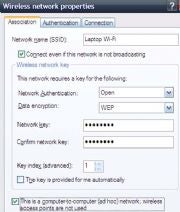
Ad Hoc Network: click for full-size imageNext time you find yourself in a hotel room with only one wired connection and a handful of laptops begging for a Wi-Fi hotspot, transform your laptop into a wireless router by setting up an ad hoc wireless network and sharing your wired gateway. Here's how it works.


First, plug the ethernet cord into your laptop. To create a new ad hoc network, be sure to enable Internet Sharing on your laptop by checking the box labeled Allow other network users to connect through this computer's Internet connection in the Advanced tab of your connection's Properties menu. From there, setting up an ad hoc network works differently in XP and in Vista.


In XP, right-click the Wi-Fi icon in your system tray and select Open Network Connections. Then right-click the Wireless Network Connection icon and select Properties. Click the Add button in the Wireless Networks tab, give the new network a name and password, and check the box next to This is a computer-to-computer (ad hoc) network.
In Vista, right-click the Network icon in your system tray and choose Connect to a network. Click Set up a connection or network in the sidebar, and choose the Set up a wireless ad hoc network option. Then follow the setup wizard and save the new network.


Once you've created your ad hoc wireless network with the laptop you plugged in, you can connect any other computer to the new Wi-Fi network just as you would connect it to any other wireless hotspot.


Set Up a Laptop Security System


If you're a seasoned traveler, you're used to working with your laptop in public places. But if you're not securing that laptop, you're asking for trouble. Apart from using a physical laptop lock (which you should already do), you can set up a software security system on your laptop with free software designed to deter thieves and to recover laptops.


For example, Laptop Alarm, when switched on, will set off a loud alarm if anyone unplugs your power cord, moves your mouse, or tries to shut down your computer. And since no security system is complete without a security camera, try Yawcam, a free app that turns your laptop's Webcam into a motion-sensing security camera capable of uploading photos of potential thieves to the FTP server of your choice.


Last but not least, the free LaptopLock utility focuses on retrieval and extra security for stolen laptops. With LaptopLock you can delete files, encrypt data, and log the IP address of your stolen laptop--all remotely.


Automatically Lock Your Computer When You Walk Away, and Unlock It When You Return


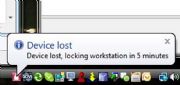
BtProx: click for full-size imageFree application BtProx monitors the proximity of your computer (laptop or desktop) to your cell phone or other Bluetooth device, and automatically locks the computer when the phone goes out of range. When you walk away from your laptop with your cell phone in your pocket, for example, the computer will automatically lock--protecting its contents from prying eyes while you're not there.


In addition, you can arrange for BtProx to launch any application at the same time that it issues the lock command--so you could automatically lock your PC and turn on your laptop security system when you walk away rom the machine.


Set Up AIM Forwarding to Your Cell


Instant messaging may seem like a productivity black hole, but in some workplaces, it's the quickest and easiest way to communicate with your coworkers. You can even reply to IMs via text message, meaning that you can have the same conversation using your phone as you would from your instant messaging client.IM Forwarding: click for full-size image


To enable IM Forwarding on the Web, just go to AOL's IM Forwarding page, click the Manage Your Mobile Settings link, and fill out the form (you'll need to log in if you haven't already).


Continues : http://www.pcworld.com/

Symantec and Intel Present General Session at SYS-CON's 4th International Virtualization Conference & Expo

With an ever increasing variety of physical and virtual endpoints, companies are rapidly facing the next big challenge - manageability. So stated Symantec's Brian Duckering and Intel's Chuck Brown in their general session on Friday at SYS-CON's 4th International Virtualization Conference & Expo held in San Jose, CA.


Sponsored by more than 40 companies, SYS-CON's 4th International Virtualization Conference & Expo attracted over 1,000 preregistered delgates from 23 different countries, and a special delegation from Tokyo, Japan.


In order to manage hybrid types of models, companies need to balance the datacenter with the needs of the users. No one model fits all, and there is the need to support different user groups. Companies need to find a solution to centrally manage and secure the these hybrid environments and they look to virtual clients to provide this.


With streaming, virtualization, and vProTM technologies, Symantec and Intel provide a set of technologies to effectively manage these hybrid environments while maximizing end-user productivity.


Sponsorship and Exhibit Opportunities for the 5th International Virtualization Conference & Expo - March 22-24, 2009, New York City
Sponsorship and Exhibit Opportunities Offered on a First-Come First-Served Basis. To inquire about sponsorship and exhibit opportunities please contact Carmen Gonzalez at 201-802-3021 or by email at events(at)sys-con.com. Currently, a limited number of sponsorship and exhibition packages with multiple sponsorship discounts are available for the upcoming events.

A Who's Who of Virtualization and Cloud Computing Technology Rock Stars!
SYS-CON faculty alumni include such notable speakers as: Bret Adam (rPath), Deepak Alur (JackBe), Theo Beack (BEA Systems), Kevin Brown (Kidaro), Donato Buccella (Certeon), Bob Buffone (Nexaweb), David Christian (MindBridge), Jonathan Clark (Thinstall), Ariel Cohen (Xsigo Systems), Andrew Conte (APC), Simon Crosby (Citrix Systems), Kurt Daniels (Parallels), Sujil Das (Mellanox Technologies), Kevin Epstein (Scalent Systems), Shai Fultheim (ScaleMP), Rick German (Stoneware), Dror Gill (Ceedo), Ravi Gururaj (VMLogix), Matthew Haynos (IBM), Stephen Herrod (VMware), Arthur Hitomi (Endeavors Technologies), Gordon Jackson (DataSynapse), Peter Jensen (Thinstall), Steve Kaplan (AccessFlow), David Kleidermacher (Green Hills Software), Madhur Kohli (Levanta), Brian Korn (Scalent Systems), Gary Lamb (AccessFlow), Rich Lechner (IBM), Matt Lee (Neocleus), Victoria Livschitz (Grid Dynamics), Bob Lozano (Appistry), Peter Manca (Egenera), Andi Mann (EMA), Jerry Melnick (Marathon Technologies), Mark Milligan (VirtualLogix), Shridhar Mittal (iTKO), Hezi Moore (Reflex Security), Phil Morris (Sun Microsystems), Parviz Peiravi (Intel), Geva Perry (GigaSpaces Technologies), Harry Petty (Brocade), Stephen Pollack (PlateSpin), George Pradel (Vizioncore), Bob Quinn (3Leaf), Ben Rudolph (Parallels), Bill Scarborough (VMware), John Stetic (PlateSpin), Brian Stevens (Red Hat), Robert Steward (DataDirect), Allen Stewart (Microsoft), Butch Villafor (Egenera), Roland Wartenberg (SAP), Matt Waxman (EMC Corporation), Julian Weinstock (Desktone), Hubert Yoshida (Hitachi) and Kurt Zieglar (SIMtone).

The Most Distinguished Faculty November 19-21, 2008 -San Jose, CA
SYS-CON's upcoming faculty includes such distinguished speakers as: Dan Avida (Opus Capital), Alex Bakman (VKernel), Michael Berman (Catbird), Ken Berryman (Symantec), Brad Brown (TUSC), Jonathan Bryce (Mosso), Donato Buccella (Certeon), Rachel Chalmers (The 451 Group), Stuart Charlton (Elastra), Reuven Cohen (Enomaly), Dave Durkee (ENKI), Mike Eaton (Cloudworks), Yakov Fain (Farata Systems), Walter Falk (IBM Global Technology Services), Mike Feinberg (EMC), Joe Fitzgerald (ManageIQ), Kyle Gabhart (Web Age Solutions), Anup K. Ghosh (Secure Command), Michel Gien (VirtualLogix), Alex Givens (UC4 Software), Dr. Robert Hagmann (Coral8), Patrick Harr (Nirvanix), Ralph James (RSSBus), John Janakiraman (Skytap), Mike Kemp (Liquid Computing), Lynn LeBlanc (FastScale), Lars Leckie (Hummer Winblad Venture Partners), Patrick Leonard (RogueWave), David Linthicum (The Linthicum Group), Paul Lipton (CA), Jay Litkey (Embotics), Bob Lozano (Appistry), Jim Mackay (iTKO LISA), Billy Marshall (rPath), Dave McCroy (Hyper9), Dwayne Melancon (Tripwire), Leslie Muller (DynamicOps), Mike Neil (Microsoft), Baldwin Ng (Microsoft), Peter Nickolov (3Tera), Gerardo Pardo-Castellote (Real-Time Innovations), Cornelius Pone (PPC), Bob Quinn (3Leaf), Sean Rhody, Jesus Rodriguez (Tellago), Michael Rowley (Active Endpoints), Nati Shalom (GigaSpaces), David Snead, Javier Soltero (Hyperic), John Suit (Fortisphere), Ratmir Timashev (Veeam), Omer Trajman (Vertica Systems), Dr. Werner Vogels (Amazon), Thorsten von Eicken (RightScale), Ed Walsh (Virtual Iron), Roland Wartenberg (SAP), John Whaley (MokaFive) Alan Williamson (Blog-City), Steve Wilson (Sun Microsystems), Rich Wolski (U.C. Santa Barbara), David Young (Joyent) and Songnian Zhou (Platform Computing).

Cloud Computing Technology Providers and Contributors in 2008-2009
The following companies are among the providers and contributors of Cloud Computing technology: 10Gen, 3Leaf, 3Tera, Absolute Performance, Accenture, Akamai, Amazon.com, Appirio, Appistry, Areti Internet, Boomi, Box.net, Canaan Partners, Cloud9 Analytics, CloudWorks, CNI Systems, CohesiveFT, CSRware, DataDirect, Dell, DNAmail, eBay, Elastra, EMC, EngineYard, Enki Consulting, Enomaly, Excelian, Flexiscale, Fortress ITX, Forum, GigaSpaces, GoGrid, Google, HP, IBM, IBRIX, Joyent, JumpBox, Layered Technologies, Level 3 Communications, Linxter, LongJump, MDV, Microsoft, Moka5 (MokaFive), Mosso, NewServers, Nirvanix, Ocarina Networks, OpSource, Panorama Software, Peer1 Networks, Pervasive Software, Platform Computing, PLX Technology, Qlayer, Rackspace, RampRate, Red Hat, RightScale, rPath, Salesforce.com, Saugatuck Technology, ServePath, Skills Matter, Skytap, SnapLogic, SOASTA, Sun Microsystems, Symphoniq, Symphony Services, Tap In Systems, Teneros, Terremark, Transitive Corporation, Univa UD, Verizon Business, Vertica, VMware, XCalibre, Zabovo.com, ZOHO and Zuora.

Virtualization Technology Providers and Contributors in 2008-2009
The following companies are among the providers and contributors of Virtualization technology: 3PAR, Accellion, Acronis, Actional, Active Endpoints, ActiveGrid, activePDF, ActiveServers, ActiveState, Actuate, Adaptec, Agile Software, AGiLiENCE, Agilysys, Akorri, AlachiSoft, Alter Logic, Altor Networks, Altova, AMD, AMDAHL, Amentra, Amyuni, anacubis, Apani, APC, Appcelerator, AppSense, AppStream, Array Networks, Ascential, Astaro, Attune Systems, Autodesk, AutoVirt, Availl, Avanade, Azul Systems, Barracuda Networks, BEA Systems, B-hive, Black Duck Software, Blackbaud, Blade Network Technologies, Blue Coat, Blue Lane, BlueArc, BlueNote Networks, BluePheonix Solutions, BMC Software, Borland, Bristol Technology, Brix Networks, BroadVision, Brocade, Burton Group, Business Objects, CA, CalAmp, Cassatt, Cast Iron Systems, Catbird, Cayenne Technologies, Ceedo Technologies, Cenzic, Certeon, CiRBA, Cisco Systems, Cision, Citrix Systems, ClearApp, ClearCube Technology, CollabNet, Compass America, Composite Software, Compugen, Compuware, Configuresoft, Continuity Software, Coraid, Courion, Coyote Point Systems, Crescendo Networks, CSC, DataCore, DataSynapse, Dell, Desktone, Digipede Technologies, Double-Take Software, Ecora Software, EDS, eG Innovations, Egenera, Elastra Corporation, Electric Cloud, Embotics, EMC Corporation, Emulex, Endeavors Technology, Enigmatic Corporation, Enterprise Management Associates, Entuity, EqualLogic, Ericom Software, ESRI, EVault, eXludus Technologies, F5 Networks, FalconStor, FastScale Technology, Foedus, Force10 Networks, Fortisphere, Forum Systems, Fujitsu, GemStone Systems, Getronics, GlassHouse, Green Hills Software, Grid Dynamics, GridGain Systems, GT Software, Hitachi, HP, Hyper9, Hyperic, IBM, ICEsoft, IGEL Technology, Illumita, ILOG, IMEX Research, Information Builders, Ingres, InstallFree, Integrien, Intel, Intellium, International Computerware, iTKO LISA, JBoss, Juniper, KACE, Kidaro, LeftHand Networks, Leostream, Lifeboat Distribution, Liquid Computing Corporation, Liquid Technology, Lynux Works, Mainline, ManageIQ, Managed Methods, ManageSoft, Marathon Technologies, McAfee, Mellanox Technologies, Microsoft, Mid-Atlantic Computers, Mindbridge Software, Mindreef, MKS, MonoSphere, Motorola, MQSoftware, mySoftIT, NASTEL, Ncomputing, NEC, Neocleus, NeoPath Networks, Neoware, NetApp, Netegrity, Neterion, Netuitive, Neverfail, Nexaweb, NextAxiom, Nimbus, Nimsoft, Niyuta, NoMachine, Novell, ONStor, Opalis Software, Open Kernel Labs, OpenSpan, OPNET Technologies, Optaros, OpTier, Oracle, Pano Logic, Parallels, Parasoft, Perforce Software, PHD Technologies, Phoenix Technologies, Phurnace Software, Pillar Data Systems, PlateSpin/Novell, Progress Software, Prolifics, ProSync Technology, Provision Networks, QLogic, Quest Software, Racemi, Raritan, Raxco Software, Red Hat, Reflex Security, Resolution Enterprises, RingCube Technologies, Riverbed Technology, Rogue Wave Software, RSA Security, Sagnet Solutions, SanDisk Corporation, SAP, SAVVIS, ScaleMP, Scalent Systems, Seanodes, Secure Command, Secure Computing, Sentillion, Shavlik Technologies, ServInt Internet Services, Silpion IT Solutions, SIMtone, Skytap, Skyway Software, Software AG, Sonasoft, SourceGear, Splunk, StackSafe, SteelEye Technology, StillSecure, StoneFly, Stonesoft, Stoneware, StoreVault, StrikeIron, STT WebOS, Sun Microsystems, SunGard, Supermicro Computer, Surgient, SWsoft, Sybase, Symantec, Systar, TBD Networks, Tenfold, TheInfoPro, Thinstall, Third Brigade, TIBCO Software, Tidal Software, Tideway Systems, TOA Solutions, TRANGO Virtual Processors, Trend Micro, Tresys Technology, Trigence, Tripwire, Ulteo, Unisys, United Devices, VaST Systems, VDIworks, VeeAm Software, Verari Systems, Verio, VeriSign, Vicom Computer Services, VirtenSys, Virtera, Virtual Iron, VirtualLogix, Virtugo Software, Virtutech, VisionCore, Vizioncore, VKernel, VMLogix, vmSight, VMware, Vordel, vThere-Sentillion, Vyatta, WaveMaker, Web Age Solutions, WSO2, Wyse Technology, XDS, XenoCode, Xiotech, xkoto, Xsigo Systems, Zenith Optemedia, Zeus Technology.


SOA Technology Providers and Contributors in 2008-2009
The following companies are among the providers and contributors of SOA technology: 3PAR, Accenture, AccessFlow, Active Endpoints, Active PDF, ActiveState, ADP, Agile Path, Agilent, Akamai, Altova, Amber Point, AMD, Antenna, Apatar, APC, Appcelerator, Appistry, AppSense, AppStream/ Symantec, Apptricity, Astaro, Asychrony, Attune Systems, Autodesk, Avorcor, Aztec Software, Azul Systems, BEA, B-hive, Black Duck Software, Blue Coat, Blue Note Networks, BMC, Borland, Business Objects, CA, Cacheon, CapClear, Cast Iron Systems, Ceedo, Certeon, Cherry Road Technologies, Cigna, Cisco, Cision, ClearApp, Cognos, Component Source, ComponentOne, Composite Software, Compuware, Coral8, Covalent, Cretaceous Software, Critical Watch, Crosscheck Networks, Curl, DataDirect, DataSynapse, Day Software, eBay, Elementool, Elixir Technology, Embarcadero, EMC, Endeavors Technologies, Ensim Corporation, Entegrity, Enterprise DB, Epicor, ESRI, Evident Software, eviware, F5 Networks, Farata Systems, Fiorano, Forum Systems, Freedom OSS, Fujitsu, GemStone Systems, GigaSpaces, Green Hills Software, Grid Dynamics, GT Software, GXS, HCL Technologies, Herzum Software, HP, IBM, Illustro, ILOG, Informatica, Infragistics, Infusion Developers, Initiate Systems, InstallFree, Intel, Intelesis, Intellium, InterSystems, Intrepid Solutions, Intuwave, IONA, IT Toolbox, Itellix, iTKO, JackBe, Jive Software, JNet Direct, Juniper Systems, JustSystems, Kaazing, Kapow Technologies, Kidaro, Krugle, Laszlo Systems, Layer 7 Technologies, Levanta, Lingo Systems, Lombardi Software, Magic Software, Managed Methods, McAfee, Megapath, Mellanox Technologies, MG Software, Microsoft, Mindbridge, Mindreef, MindTouch, MiracleSoft, MKS, MomentumSI, MQ Software, Mule Source, NASTEL, Nexaweb, NextAxiom, Nextel, Nokia, Nortel Networks, OASIS, Object Builders, ObjectFocus, Odyssey Software, Opalis, Openmake Software, OpenSpan, OpTier, Optio Software, Oracle, Parallels, Parasoft, Pervasive Software, PlateSpin/ Novell, Progress Software, Prolifics, Protecode, Quest Software, Questra, Raxco Software, Recursion Software, Red Hat, Reflex Security, Research & Markets, RadiantLogic, Ring Cube Technologies, Riptide Software, Rogue Wave Software, rPath, RSA Security, SAIC, Salesforce.com, SAP, Satyam, Scalent Systems, Seagull Software, Securent, Sherpa Software, Sierra Systems, Skytap, Skyway Software, SOA Software, Software AG, Sonic Software, SourceGear, Spike Source, Splunk, SpringSource, Starcom Worldwide, Stoneware, Stonewater Systems, Strike Iron, Sun Microsystems, Sybase, Tenfold, Thinstall, TIBCO, Tidal Software, Tideway Systems, Trivera Technologies, TwoConnect, Vastera, Verari Systems, Verio, Vertigo, Vignette, Virtual Iron, Visual Mining, Vitria, VMware, Vocus, Vordel, Web Age Solutions, webmethods, Whizlabs Software, Wipro, WSO2, XAware, Xsigo Systems, ZapThink and Zimbra.


Source : http://virtualization.sys-con.com/

Intel graphics discontent justified?


Discontent with Intel graphics goes back a few years. But the unsealing of 2-year-old e-mail exchanges between Intel and Microsoft reveals something about the present, too.


Intel 915 chipset

Intel 915 chipset

(Credit: Intel)

First some background. Intel makes integrated graphics silicon--that is, graphics functionality that is built into its chipsets. Performance is not the name of the game for Intel. Delivering power-efficient, adequate graphics that can handle everyday tasks and do basic gaming is the goal. Anything beyond this is left to the high-octane discrete chips from ATI and Nvidia.


"We've always been consistent that high-end gamers should use discrete graphics," said Intel spokesman George Alfs. Intel graphics is also inexpensive and comes virtually free on some PCs.


But Intel graphics silicon is everywhere. It ships in tens of millions of PCs every year. And herein lies the issue. It becomes the lowest common denominator that Microsoft and game developers must write to because it's ubiquitous.


This is the root of the Intel 915 integrated graphics and the "Vista Capable" controversy. As widely reported, Intel's 915 (which shipped as standard in many PCs) was not up to running Vista's Aero Glass interface (among other features). So, Microsoft dropped this as a requirement.


Reams of material have been released according to this Seattle Times blog documenting the infighting that took place trying to resolve the 915 issue. The documents are from a lawsuit in which the plaintiffs allege that Microsoft misled consumers by lowering the requirements so a 915-based PC could be designated as "Vista Capable."


According to an unsealed motion citing e-mail and internal Intel and Microsoft documentation released by U.S. District Court Judge Marsha Pechman, Microsoft objected to an internal Intel link "positioning the 915 GM as optimum for Windows Vista on mobile PCs." The motion states that Microsoft viewed this as "misleading" and "egregious" and that Microsoft asserted that the 915 chipset "should not even be in the list of recommended hardware for Windows Vista" and further opined that the "higher end of the chipset choices" from Nvidia and ATI were more suitable.


But that may not be the whole story. According to an article on Channel Web, Microsoft did not "cave" to Intel and the 915, but rather "it was Microsoft, led by Poole, that initiated that change all on its own." Will Poole at that time was a Microsoft senior vice president.


"We are seriously confused. We believed that 915 is NOT vista ready as it will never have WDDM drivers," according to an e-mail from Intel Vice President Renee James, cited in the Channel Web article. (WDDM stands for Windows Display Driver Model.)


Whatever the case, Intel integrated graphics was so commonplace that it was a big issue.


(For the record, Nvidia had issues with its drivers and Windows Vista too.)


Intel targets graphics
Fast-forward to September of 2006 and the Intel X3000 and X3100 (G965/GM965) graphics. With this silicon, Intel decided it was going to provide a better graphics experience for gaming in particular. The 965 started shipping in September of 2006, but it took Intel nearly a year to write the drivers needed to unlock better performance.


"New drivers for the company's 965GM chipset, found in many notebooks and midrange desktops, still don't deliver the uniform performance increases promised earlier this year, according to testing by CNET Labs," CNET News' Tom Krazit wrote in October 2007.


Intel documentation (here) says that "Intel recently introduced the 15.6 and 14.31 Windows Vista and Windows XP graphics drivers that enables Shader Model 3.0 including support for hardware vertex shader and HW TnL on the Intel G965, GM965, and G35 Express Chipsets."


The document continues: "This capability has shown enhancements in game compatibility as well as game play" and concludes the "Introduction" by saying: "The end result is that Intel is able to deliver the highest possible frame rates by leveraging Intel's world class processors."


Now fast-forward to the present and the MacBook Air. The first version of the MacBook Air was rolled out in a show of great camaraderie with Intel CEO Paul Otellini. Intel silicon all around: not only a special version of the Intel mobile Core 2 Duo was used, but Intel X3100 graphics, too. At that time, Apple CEO Steve Jobs heaped praise on the Core 2 Duo processor.


Then came the MacBook Air update. Intel graphics out, Nvidia 9400M graphics in.


This time Apple stressed the graphics capability of the Air.


Gains and compromises
To reiterate, the issue is not that Intel graphics are horrendous. It's simply that Intel's graphics silicon is so widespread that it becomes an issue for people, for example, who buy a laptop and later decide they want to play games at a certain level or do more high-level graphics.


What do analysts think about the X3100? Jon Peddie says Intel graphics has improved, but he is cautious. (Note that the X3100 has recently been superseded in laptops by the Intel GMA 4500MHD.)


"Whereas it would never be used by a real gamer (of which I like to consider myself) it will allow someone with a tighter budget to have some experience (with gaming on a PC)," Peddie said in response to an e-mail query. Peddie does research and testing of graphics products from Intel, Nvidia, and ATI.


Peddie: "Based on early tests we have run on the X3100, we found it ran all the games we tried, i.e., Spore, Stalker Clear Sky, Crysis, and Far Cry Warhammer, but "mind you we had to use lower resolution than we would normally, and if the game didn't automatically turn off some of the special features, we had to in order to get a descent frame rate."


He continues: "But the fact that it ran at all is I think a major slap on the back for Intel. Turning features off and reducing resolution is a reasonable compromise considering the costs."


But Intel (to state the obvious) is not Nvidia. "Now having said that I also have to say that the Nvidia mGPU 9400 (now used in the MacBook Air) is much more capable and you can run at higher resolutions with more features turned on," Peddie said.


The conclusion. Intel graphics is adequate and probably does more than enough for most users. But the issue will never go away because integrated graphics set itself up as a low-watermark benchmark for competitors (that offer higher-end discrete cards) to surpass. Meanwhile, it forces multimedia and game developers to make their games and applications run in a less-than-stellar way on millions of PC worldwide.


Source : http://news.cnet.com/

Getting to the Core of Intel's New Core i7 CPUs

Intel's new "Bloomfield" quad-core Core i7 processors are the company's first to be based on its long-previewed "Nehalem" architecture. You see, the Core i7 family doesn't just mean new CPUs, they use a new chipset, a new system bus, and a new socket structure. In short, it's a whole new ballgame. This is the first major technology jump since mid-2006, when Core 2 CPUs showed up on the scene. Yep, in those two years since, we've seen incremental upgrades stacking on more cores at higher clock speeds while dropping the manufacturing process down to 45nm. But buckle up for what's next.


Core i7 Highlights:


  • 45nm design with 8MB of on-die Level 3 cache


  • Intel's existing Front Side Bus architecture is replaced with its QuickPath Interconnect (QPI) technology that ferries files at a peak rate of 25GB/second to help speed the data's journey. As I understand it, that is the theoretical limit, but not all the new Nehalem CPUs will approach that speed.


  • Hyperthreading makes a come back. The four cores can each process two threads at once so the operating system thinks its dealing with eight CPUs.


  • A "Turbo Burst" feature pushes individual cores into the red zone (133MHz to 266MHz over base clock frequencies) when a program calls for it. But this happens automatically in the background -- pretty much invisible to the user.


  • Integrated memory controller supports three channels of DDR3 (only) memory per socket. By finally making it move off the North Bridge, latency will drop (just don't ask me the exact percentage, our tests haven't fully run their course, yet).


  • Uses Socket B (LGA1366) for motherboard installation. This is the same socket type that's expected to be used by "Westmere" series CPUs; Intel's next major mainstream desktop processor update slated for Q4 2009.


  • Another thing Intel is playing up: The "green" factor. Hey, it's a popular -- and important -- buzzword these days. A dedicated processor core regulates power management. Keeping an eye on thermals and power use, this processor's job is to maintain peak efficiency with minimum waste (and minimum hassle to the user)


  • Intel also makes its move to step up Streaming SIMD Extensions (SSE) instructions to improve graphics and reduce times for transcoding video. It'll be interesting to see how this move stacks up to what Nvidia's been proposing for a while now: using a GPU and lower-end CPU with better, more cost-effective transcoding performance. Hey, Nvidia's been shouting out for a while now that you don't need a high-end CPU to do everything --I'd pay to see that grudge match. As we start getting in machines sporting Core i7 architecture, we'll be able to pit the two against each other and see whose solution is better.


Core i7 Pricing and Desktop PC Reviews


How much are these gonna run you? The 2.66-GHz Core i7 920 goes for about $300. The 2.93-GHz Core i7 940 costs in the neighborhood of $580. The meaty 3.2-GHz Core i7 965 Extreme sells for roughly a "mere" $1060.


While I can't speak to how well it plays (we're still testing a bunch of Core-i7 equipped machines), let me direct you to our review of Falcon NorthWest's Mach V (or watch the video below) for more details.


Source : http://www.pcworld.com/

The Nintendo Wii is the eco-friendly 'green' game console

Is your video game console a green console? A new study by the National Resources Defense Council (NRDC) shows the Nintendo Wii to be the greenest of the next-gen consoles.


In fact, comparing the Wii to the Xbox 360 and PlayStation 3 is like comparing the electric car to a couple of SUVs. While the Nintendo Wii uses just 16 watts of power while in active mode, the Xbox 360 uses 119 watts, which is over 7 times more than the Wii, and the PlayStation 3 uses 150 watts, which is almost 10 times more than the Wii.


But that doesn't mean you need to exchange your high-powered console for a Wii if you want to be eco-friendly. The NRDC study indicates that much of the energy used to power video game consoles is actually wasted. Simply powering down the console after use can save a whopping 90% of the energy costs.
Set Your Video Game Console to Automatically Turn Itself Off


Like many people, I tend to leave my Xbox 360 on after I finish playing it if I think I might play another game within an hour or two. And, like many people, that hour or two stretches out over the day. According to the study, this leads to much of the energy usage of these consoles.


Both the Xbox 360 and the PlayStation 3 have settings that will automatically power the machine down if they've been idle for an extended period of time, but these settings are turned off by default. Simply turning these settings on will translate to energy savings.


The eco-friendliness of game consoles is becoming more important as they turn into all-purpose entertainment systems. The PlayStation 3's ability to play Blu-Ray DvDs and the Xbox 360's ability to play Netflix instant-access movies shows a continuing trend for game consoles to become the central point of our entertainment systems, so it is becoming more important to be aware of the energy consumption of these machines.


You can download the NRDC study here.


Source : http://www.examiner.com/

Nintendo Adds Cameras, Music Playback to DS

It's official: The much-buzzed-about Nintendo DS makeover is no longer just a fanboy's fondest wish, it's the real deal.


During a press event in Tokyo Thursday, Nintendo president Satoru Iwata took the wraps off the DSi, which packs two bulit-in cameras, music playback and a bigger display than the current model.


The DSi will ship in Japan on November 1, migrating to the U.S. in 2009. It will sell for 18,900 yen, which translates to about $179.


This is the third iteration of the DS since the platform launch in late 2004, and the system is the undisputed champ of the handheld game market. Nipping at its heels, though, are all the other feature-rich devices that have launched in the past four years, such as the iPhone, the iPod touch, and the Sony PSP, which also gets a refresh in mid-October.


The DS has done gangbuster business for the venerable Japanese company since its 2004 launch. To date, Nintendo has sold nearly 80 million DS’s worldwide, and has consistently outsold all comers — even the spotlight-hogging Wii — month after month in the U.S.


But the PSP is starting to gain momentum, particularly in Japan. A report from Enterbrain, a Japanese game-magazine publisher, showed the PSP besting the DS in sales during the first half of the year. The PSP 3000, due out later this month, features a built-in microphone and a better screen.


Michael Pachter, an analyst with Wedbush Morgan, says the "design changes (on the DSi) are aimed at creating a better gaming platform than the PSP that’s got better functionality." The announcement clearly is meant to blunt any momentum Nintendo's competitors may be enjoying — particularly in Japan.


Denise Kaigler, vice president of corporate affairs for Nintendo America, says that "the market appears to be maturing for the current DS" in Japan. "There are about 23 million DS's sold in Japan, into 49 million households," she says. In other words, half of all households in Japan already own a DS — and they need a good reason to buy another one.


"One of the reasons we're not actually introducing the DSi into the Americas yet is because we see a lot of potential left for the current Nintendo DS Lite," she says, pointing out that the product had a record-selling year in the U.S. in 2007, and is on track to beat that year by about 29 percent in 2008.


Still, Nintendo faces a significant combined threat from Apple's iPhone and iPod touch in the U.S. market. Apple has stated very plainly that it intends to be a big player in the handheld game market. In March, the company rolled out a software developer’s kit intended to get third parties creating games and other cool stuff for the iPhone and the iPod touch.


The App Store, Apple’s marketplace for these applications, opened for business in July and to date, there are more than 900 games available for free or for purchase. The Nintendo DS, by contrast, took four years to amass a software library of 600 games.


Of course, many of the 900 games in the App Store are variations of Sudoku and “Bejeweled.” But developers are clearly psyched by the openness of the platform — and the potential audience for their games. And Apple is clearly demonstrating that it’s serious about games, too.


At its “Let’s Rock” event in San Francisco last month, Apple exec Phil Schiller demonstrated a very special version of EA’s “Spore” on a revamped iPod touch, and Jobs called it “the funnest iPod ever.” He even went so far as to dub it “the best portable device for playing games.” Our own Citizen Gamer, Winda Benedetti, interpreted that statement as a shot across the bow at Nintendo and Sony.


But Pachter says he thinks Nintendo is less worried about Apple and more interested in trying to squeeze Sony out. “They’ll gladly let Apple have its niche of 20- to 40-year-olds who are too hip to be believed, but I don’t think they want to cede the games market.”


Especially not in Japan. The recent spike in PSP sales — spurred by last year's rollout of the cheaper PSP 2000 and Capcom's mega-selling, PSP-exclusive "Monster Hunter Freedom 2G" — has naysayers predicting the DS's imminent demise. The announcement of the DSi should serve to quell those in comments in Nintendo's home country, he says, and whet the appetite of Nintendo fanboys in Europe and the U.S.


"I think the success of the Wii and DS has given (Nintendo) the confidence that anything they do that works in Japan will work elsewhere," he says.


Source : http://www.happynews.com/

Nintendo Wii Is Greenest Games Console

Spending hours sat on your sofa playing console games isn't just bad for your health -- it's bad for the environment and bad for your bank balance too.


The US Natural Resources Defense Council has undertaken some research into how much electricity is required to power each of the main games consoles.


It makes for scary reading, especially if you leave your console switched on when you're not playing it.


US games fans are likely to spend $160 per year on their Sony PlayStation 3 alone, just to keep the thing powered up, though the first version of the PS3 is not quite as bad, at $134. The consoles use just as much power when switched but not being played -- something it seems many gamers are guilty of doing.


Microsoft Xbox 360 owners, meanwhile, are likely to fork out $143 if they bought the console when it first came out, while the updated version, launched in 2007, accounts for a slightly more modest $100 per year of the electricity bill.


"If you leave your Xbox 360 or Sony Play Station 3 on all the time, you can cut your electric bill by as much as $100 a year simply by turning it off when you are finished playing," said NRDC senior scientist Noah Horowitz.


Needless to say, British gamers are likely to have yet higher electricity bills by way of thanks for their devotion to the world of gaming. We don't have European energy consumption figures to hand to make a ready comparison, but utility bills in the US are markedly lower than those in Europe.


It's also fair to assume that the US Natural Resources Defense Council has a particular aim in mind in publicising these figures. Leaving your games console in standby makes a huge difference to the energy consumption figures: it costs only a tenth as much to run a PS3 if you remember to turn it off whenever you're not fulfilling your gangster dreams in Grand Theft Auto.


You don't necessarily have to get into the habit of switching off your gadgetry every time you've finished a gaming session either. Idle or standby modes are better than leaving the console switched on.


However, the US NRDC report points out that there are perfectly good power-savers built in to the consoles. "Automatic power-down features -- which shut off devices if they are left idle for a certain amount of time -- are big energy-savers. The feature exists in the Xbox 360 and was recently added to the Playstation 3, but it is rarely used and leaves room for improvement."


The Nintendo Wii console, however, emerges with a glowing report card. It costs just $15 a year to run in ruinous always-on mode, or $3 a year if its owner switches it off every time it's not being actively used. By comparison, the Sony PlayStation 3 uses five times as much electricity per year.


The good news, of course, is that by implementing the NRDC's suggestion of powering down your PS3 when you've finished annihilating baddies and saving the world, your leccy bill will drop by a factor of 10 too. Truly heroic.


Source : http://www.pcworld.com/

Nintendo Minute: 11.21.08

Longtime IGN readers may remember our Nintendo Minute series, in which we presented Nintendo of America's highest-ranking executives with one new question per week. After an extended hiatus, the feature returns complete with answers from the company's new guard. In the weeks and months to come, we will be posting new Minutes answered by Denise Kaigler, NOA's vice president of corporate affairs.


To learn more about Denise and her esteemed background, check out her IGN Stars profile.


If you have a question that you want Nintendo of America to address, please send it our way. Simply click right here.


Q: Wii and Nintendo DS are both running a distant first place. Has Nintendo won the console wars?


Denise Kaigler: Have your readers noticed that it's usually members of the media who love using terms like "console wars." Like "auto wars" or "cola wars," they conjure up strange images of corporate titans clashed in some epic battle, or masterminds and their henchmen wringing their hands as they plot world domination. So let's all take a deep breath and put it into perspective. It's not a war. It's entertainment, it's videogames … it's fun!


The problem with words like "wars" and "winning" is that they imply a sense of finality, an end. Yes, while Wii and Nintendo DS continue to do very well, there's never going to be a day when Nintendo looks at the sales numbers, kicks back and declares, "well, we're done." That's the challenge and the fun of the video game industry. We must constantly remember to push ourselves to try new things. If there's a battle going on, it's with ourselves and our sense of complacency. In this industry, if you think you have everything figured out, that's when you're really in trouble.


And as I've said before, it's not up to Nintendo to determine how long we will be in this position. That's the job of consumers, the people who buy and play our games. All we can do is try to keep pushing the envelope, whether it's experimenting with new kinds of games, developing new experiences or finding ways to draw new players into this form of entertainment that you and I enjoy so much.


Source : http://wii.ign.com/

Review : Tetris Party for Nintendo WiiWare

Tetris Party by Hudson is a pretty darn good re-envisioning of the godfather of all puzzle game Tetris on Nintendo WiiWare. Now this has a pretty good version of the original Tetris but it has a metric ton of new modes to play that still remains true to Tetris. It sort of reminded I was reminded of Space Invaders Extreme or Pac-Man Championship.


The graphics were clean but It didn't feel Russian enough for me. I was waiting for the Nutcracker suite and the Kremlin in the back ground.


Now where the game really shines is the competitive game play against another player. The verses modes either in-room and online was just as tight as Capcom's Puzzle Fighter or other competitive puzzle games. When you clear Tetris lines space up from the bottom moves your opponents block up towards the top of the screen and there is a bunch of new attack items that can screw up your opponent. My favorite attack item has you point at the screen with the Wiimote and shoot individual blocks at the other player's screen. It really messes up their plans if you block their Tetris plans. You can play with four players in room and up to six players online via the Nintendo Wi-Fi Connection. The online matchmaking was pretty fast and extremely satisfying to win. This six player online Tetris battles was very cool. There is world wide game play with ranking and player stats. It actually makes me a little giddy to finally see good online casual action against other real humans via this big crazy thing called the Internet. Please Nintendo.. More online games if you would.


They are going to be organizing aonline tournaments and the top 500 best scores at the end of the first tournament (December 1-January 31, 2009) can win 1200 Wii Points.


Each player will be represented with their Mii and there is a mode that you can play with the WiiFit Balance board. (I didn't try it out since I don't have one.)


There is a Co-op Tetris mode that was actually a little hard since I could not tell what the computer was going to do. The Shadow mode has you fill a shape with Tetris blocks. The Stage Race mode has you try to squeeze a single block through a long course to reach the finish line. But the most intriguing new mode to me was the Field Climber mode. In this mode there are these little guys that will climb up the Tetris blocks and you need to build platforms and stairs to help them reach the top of the screen. However it can get tricky because you can easily trap them in a hole or accidentally smoosh them under a falling block. It is fun but I am not very good at it yet.


Hudson has been making some respectable WiiWare games that are actually fun and online. It is available for 1200 Nintendo points ($12 US) from the online Wii Shop Channel and is a darn good casual puzzle game for it's price. Makes a game that is more that two decades old seem like a new game and it actually got me excited about playing Tetris again.


Source : http://blog.seattlepi.nwsource.com/

Nokia Opens New Research Center in Hollywood

Nokia has opened a new research facility in Hollywood, where it plans to develop a range of entertainment-related applications and technologies.


Researchers at the facility will work on various media projects involving film, music, games, the Web and television, the company said in a statement. Research topics will revolve around content creation, user interface development and community interaction.


The lab expects to build new user interfaces that could incorporate more natural forms of interaction, Nokia said.


The company plans to recruit from and collaborate with the Hollywood entertainment community, and will work with the University of California at Los Angeles and the University of Southern California, it said.


Nokia also has U.S. research centers in Palo Alto, California, and Cambridge, Massachusetts, as well as facilities in Europe and Beijing.


When Nokia opened its Palo Alto facility in 2006, the move appeared in part designed to help boost the mobile-phone giant's position in the U.S. market. While Nokia is the number-one handset maker worldwide, its market share in the U.S. is currently under 10 percent. Despite promises to work hard to improve its U.S. position, Nokia has continued to lose market share in the U.S. over the past few years.


Source : http://www.pcworld.com/

Check Point Software shares edge higher

Shares of Check Point Software Technologies Ltd. edged higher Thursday, helped by an analyst report predicting the Internet security software company will fare better than its competitors in a weakened economy.


Morgan Keegan analyst Brian Freed reiterated his "Outperform" rating on the stock. He noted that about 60 percent of Check Point's revenue comes from recurring business than returns on large capital expenditures.


Meanwhile, spending on software security remains a high priority, Freed said.


He told investors in a note that Check Point is not immune to the downturn, "but we do believe the company is better off than its peers."


He added that trends in the quarter to date "indicate that the company is generally tracking a level consistent with guidance. While it is still early in the quarter and December will be critical, the initial signs look positive."


Check Point's stock rose 43 cents, or 2.3 percent, to $18.87 in afternoon trading.


Source : http://www.ibtimes.com/

Nokia's Point and Find Phone Interface Moves Closer to Reality

For months Nokia has been working on Point & Find, a new technology that allows users to simply point their camera phones at a banner and get more information on their device.


Now the company says it is ready to launch the service "very soon." Nokia says it will make Point & Find available as a public beta starting with a movie service.


The service will allow users to point their cellphone cameras at a movie poster and get information about the movie on their phone such as show times and trailers. It will also include the ability to book tickets.


"There is a lot of physical media out there--billboards, posters, restaurant menus, building--they could turn into a doorway for more information," says Philipp Schloter,general manager for the Point & Find program. "This makes the connection between the digital and the physical world."


It's also part of the company's quest to find ways for people to do more with their cellphones going beyond the traditional keypad interface, says Nokia.


Point & Find works by comparing the image in the viewfinder with a set of image properties in a database and the user's location. The technology came out of Nokia's 2007 acquisition of a company called Pixto.


Nokia is looking to partner with companies to extend the idea. For users it means they could walk down the street and point their camera at a restaurant banner and get the menu on the phone or buy with a point and click through their phone.


"Companies can define where a picture will go and what it is about," says Schloter, "and that content can reach users easily."


The technology could be a step ahead of 2D-barcodes or QR codes that are popular in Japan because it is more intuitive and capitalizes on the ubiquity of camera phones and Nokia's position as one of the market leaders.


Point & Find will initially be available only to Nokia phones but it will ultimately be extended to all camera phones with basic GPS capability, says the company.


See a demo of Nokia's Point and Find technology


Source : http://blog.wired.com/

Nokia Opens New Research Center in Hollywood

Nokia has opened a new research facility in Hollywood, where it plans to develop a range of entertainment-related applications and technologies.


Researchers at the facility will work on various media projects involving film, music, games, the Web and television, the company said in a statement. Research topics will revolve around content creation, user interface development and community interaction.


The lab expects to build new user interfaces that could incorporate more natural forms of interaction, Nokia said.


The company plans to recruit from and collaborate with the Hollywood entertainment community, and will work with the University of California at Los Angeles and the University of Southern California, it said.


Nokia also has U.S. research centers in Palo Alto, California, and Cambridge, Massachusetts, as well as facilities in Europe and Beijing.


When Nokia opened its Palo Alto facility in 2006, the move appeared in part designed to help boost the mobile-phone giant's position in the U.S. market. While Nokia is the number-one handset maker worldwide, its market share in the U.S. is currently under 10 percent. Despite promises to work hard to improve its U.S. position, Nokia has continued to lose market share in the U.S. over the past few years.


Source : http://www.pcworld.com/

China Mobile Ramps Up 3G Launch as Nokia Jumps Aboard

China's bid to establish its own next generation mobile phone technology standard got a boost from the world's biggest cell phone maker.


China Mobile Ltd (NYSE:CHL), the worlds' largest mobile provider, is getting support from Nokia Corp (NYSE:NOK), to launch handsets by the end of 2009 based on the Chinese 3G technology known as TD-SCDMA. The new dual-band phone will also be compliant with the more globally adopted GSM standard.


The announcement on Wednesday, which also reaffirms Nokia's support for the standard, comes amid reports that China Mobile is in talks for similar deals with other handset makers including U.S.-based Motorola Inc(NYSE:MOT) and joint-venture Sony Ericsson a company owned by Sony Corp. (NYSE:SNE) and Ericsson AG (Nasdaq:ERIC).


China Mobile, which hopes to launch the new 3G network by mid-2009, began testing the 3G technology this year in several cities, including a high profile trial this summer with Samsung Electronics Co. during the Beijing Olympics. China Mobile is preparing to launch the second phase of its 3G network expansion to a total of 38 cities from the current 10.


Nokia president Colin Giles reaffirmed his company's commitment to the new technology at the Mobile Asia Congress in Macau.


"Nokia firmly supports the development of TD-SCDMA. Our goal is to not only develop TD-SCDMA products that can deliver outstanding user experiences to consumers, but also to work with operators, chipset providers, developers and all parties along the value chain to support the creation of a vibrant TD-SCDMA ecosystem in China."


Nokia said the new phone will run its Symbian mobile operating system using the s60 smartphone software platform. Nokia emphasized millions of developers use Symbian with over 10,000 third party applications on the platform commercially available.


China Mobile chief executive Wang Jianzhou said the company was "very excited" to hear the announcement calling Symbian a "mature and leading" system that would enhance the operator's offerings.


"We look forward to working together with Nokia to further drive TD-SCDMA development in China," he said.


Source : http://www.ibtimes.com/

Dell donates mobile computer labs to schools impacted by hurricanes

Since Dell has been such a big part of many of our lives, I can’t help but spread the word when Dell does something really good.  I ran across a press release on Dell’s website today announcing that Dell is donating "mobile computer labs" to some of the school districts that were hit hardest by the hurricanes this past year.  This includes five school districts each for Louisiana, Mississippi, and Texas.  I love to see companies do things like this to help kids continue to have the technology needed in today’s schools.


Here’s a little more detail on the labs from Dell’s press release:


"Designed with input from educators, these secure, flexible mobile computer labs provide an average-sized class with a 2:1 student-to-computer ratio or better. They include:


16 Dell LatitudeTM  laptops


One Datamation mobile laptop cart


One wireless access point


One Dell laser printer


3 years Dell technical support


Microsoft Office Professional Edition 2003


Adobe Photoshop Elements and Premiere Elements Software


Wireless Internet access


Intel, Microsoft, Adobe, Datamation Systems, Time Warner Cable, Cox Communications and Cable One also contributed to the donations." -Dell Inc.


Again, thank you Dell for showing your support for the kids affected by the storms.


Source: Dell Inc. - Press Release

Digital Gear: IPhone Clone Tries to Whip up a Storm

The iPhone has stolen the hearts of millions, but nowadays it's far from the only slick-looking touch-screen phone in town. Two recent additions to the pack are T-Mobile's G1, which launched last month, and Research In Motion's BlackBerry Storm, which came out just this week. The Storm has a great touch screen and battery life but lags on storage. In handheld video cameras, Pure Digital Technologies took some cues from the iPhone's design with its Flip Mino HD camera, which shoots high-definition video but is a bit costly. For One Laptop Per Child's XO laptops, some colorful and affordable accessories have gone on sale at ILoveMyXo.com.


Blackberry Storm


Research In Motion's BlackBerry Storm is on my holiday wish list next to the G1. Like the iPhone it can make calls, browse the Internet, navigate roads via GPS and show YouTube videos. But the iPhone and the Storm differ in many respects, and each has its own advantages.


The Storm has a higher-resolution display, at 480-by-360 pixels. It offers five-and-a-half hours of 3G talk time, according to RIM, compared to five hours for the iPhone. And the Storm has a 3.2-megapixel camera with built-in flash, besting the iPhone's 2-megapixel camera with no flash.


They are similarly sized but the iPhone is tops for weight, storage and connectivity. The Storm weighs 155 grams (0.34 pounds) and has just 1G byte of onboard memory, while the iPhone weighs 133 grams and comes with 8G bytes or 16G bytes of storage. (The Storm also has 128M bytes of built-in flash storage and a MicroSD card slot for adding more.) The Storm doesn't have a Wi-Fi networking option, which the iPhone does, and it doesn't yet have an equivalent to Apple's App Store, but that should be coming next year.


The decision on which to choose may come down to ease of use, for which the iPhone is famous. I haven't tested the Storm thoroughly yet, but BlackBerry devices are known to handle e-mail better, which is handier for me. The Storm is priced at US$199.99 in the U.S. with a two-year contract from Verizon Wireless. It is also available in the U.K., Australia, New Zealand and Canada.


Flip Mino HD


Pure Digital Technologies' sleek-looking Flip Mino HD video camera is sparse on features but high on price. It's small enough to fit easily in the pocket and simple to handle. But at $229.99 it may be unappealing at a time when many people are counting pennies.


It's not a high-end camera with frills like manual focus and optical zoom, but it is simple to use. A no-nonsense interface allows you to press one button to shoot or play back video. It has a 1.5-inch LCD screen, weighs 3.3 ounces (93 grams) and comes with 4G bytes of storage.


Running on a lithium-ion rechargeable battery, the camera can shoot one hour of video at 1280-by-720 pixel HD resolution. That's a big improvement over its predecessor, the Flip Mino, which recorded at 640-by-480 resolution. It can only be recharged by plugging it into a computer's USB port, which may be its biggest drawback; it means you can't recharge the device unless you have access to a computer. The company plans to offer an AC adapter for recharging at some point in the future, a company spokeswoman said.


After connecting the Mino HD to a PC, videos can be easily e-mailed or uploaded to video sites like YouTube. The device works with both the Mac and Windows operating systems.


If the price seems acceptable and you're in need of a lightweight video camera, this may be the one for you. It can be bought directly from Pure Digital or from online retail sites like Amazon.com.


XO accessories, not from OLPC


OLPC's XO laptops went on sale at Amazon.com on Nov. 17, and ILoveMyXo.com is now offering a complete travel pack of XO accessories. For $75 it includes a USB light, a wireless optical mouse, a 2G-byte flash drive, a LAN adapter, a stylus and headphones. For an additional $10 the store will add a laptop bag, though XO laptops already have a handle. Most of the accessories are designed to match the XO's green scheme. About 5 percent of the proceeds from sales will be donated to OLPC, writes owner Brady Pierzchalski on the company's Web site.


ILoveMyXo also sells XO replacement parts, including batteries and keyboards. Another site, XOexplosion.com, also sells XO accessories and parts.


Enjoy opening those boxes


The plastic boxes that gadgets are wrapped in are often hard to open and can even lead to cuts and bruises if you're not careful. You can now ease that with Zibra's Open It cutting tool, which is designed to open hard plastic boxes. It's even got a screwdriver built in to boot. The $12.99 device is available on Zibra's Web site and at Amazon.com for $10.30.


Source : http://www.pcworld.com/