Spiga

Game Guys Review "Big Bang Mini" for the Nintendo DS

Big Bang Mini is the latest offering from Southpeak Interactive for the Nintendo DS. The game is fun, but describing why is difficult. It's similar as to how Katamari Damacy and Fantavision are fun for some reason, though you can't quite put your finger on why. The overall concept of Big Bang Mini is to fire firework-like projectiles from the bottom screen at enemies on the top screen by flicking your stylus in the direction you want to aim while at the same time protecting your little spaceship (also on the bottom screen). And...well...that's about it. I guess you can say it's the next evolution of classic top-down flying shooters like 1984.


The music and graphics in this game can only be described as quirky but good. Each world (level) is set in a different real-life area (ie: Taiwan, New York, Paris, etc.) with a different piece of background music and a different overall aesthetic to match. Each world has nine stages and a boss battle at the end. Once the boss of the world is defeated, the next world is available for play. The final world, though, isn't someplace you can easily travel to on this earth..."The Abyss".


Throughout Big Bang Mini, the standard straight-shot projectile will be your basic weapon, though upgrades such as the weaker-than-your-normal-shot homing missiles that are unlocked later in the . To add an additional challenge to the game, if your projectile hits a side of the screen instead of an enemy, it explodes like a firework, dropping small bits of fallout. It must be avoided like enemy fire, lets your ship gets destroyed. I suppose it's to discourage "spam" firing.


There are negatives, though. To move your ship, you put your stylus onto it and drag it somewhere else. If you are flicking the stylus to send up projectiles, but you touch your ship, the game will assume you're trying to shift your ship's position, and will cancel the fire of the projectile you were trying to shoot -- probably not good if you're trying to beat the level. Also, despite the aesthetics changing, the game can at times seem a little repetitive.


Overall, Big Bang Mini is rather engaging and entertaining. And while it can get repetitive if played for a while and accidentally moving your ship into danger or misfiring in an odd direction is a pain, the pluses outweigh the minuses in this title.


Big Bang Mini is rated "E for Everybody" by the ESRB and our final Game Guy Grade is "B+".


Source : http://www.news10.net/


DICE: Nintendo Courts Indie Developers for Wii, DSi


LAS VEGAS -- Nintendo wants more indie games -- not only on Wii, but on the upcoming DSi hardware.


That's the message that Tom Prata, the gamemaker's senior director of project development, sent to an audience of game developers and executives as the DICE summit drew to a close on Friday. While Prata acknowledged that Nintendo's move into indie game distribution was not without its hitches, he sought to assure the crowd that Nintendo was committed to fixing those issues.


Prata was joined by Kyle Gabler of 2D Boy, whose downloadable game World of Goo (above) is the third highest rated Wii game on the market and the winner of last night's Academy of Interactive Arts and Sciences award for outstanding achievement in game design.


Gabler brought the requisite indie street cred to the presentation -- he did not directly discuss how his two-man company worked alongside Nintendo, but he did illustrate how being such a small organization can help drive a game with a singular creative vision.


For Prata's part, he addressed some of the issues that have become apparent with WiiWare development thus far, the sort of things that might turn off potential developers. "WiiWare is not magic, and digital is not perfect," he said.


Reach is a problem, he began: Not all Wii owners are connected online, which is a requirement if one wants to sell them a downloadable game. Prata said that Nintendo is "working to increase the connection rate."


Storage is a constant issue -- the Wii only has a small amount of onboard storage for games. Prata did not reveal Nintendo's solution, but only pointed out that the company president Satoru Iwata had, speaking in Tokyo last month, announced that a better storage solution is forthcoming.


Finally, Prata said that Nintendo is still attempting to work out better ways of promoting WiiWare games. As one example of new tactics the company is using, it will partner with GameTrailers to let users submit their own videos of World of Goo playthroughs for an upcoming contest.


With downloadable content, Prata said, "making it and forgetting it" doesn't fly -- "you have to create the content, and then you have to raise it up," he said. "I think that there's more that Nintendo can do to support (WiiWare games). This year, Nintendo will increase resources for development and promotion."


Prata concluded by discussing the upcoming launch of the DSiWare download store, which he said would go live when the Nintendo DSi hardware is released in the U.S. on April 5. While he did not say which games Nintendo would release in the U.S., he showed a lengthy video demonstration prepared by Nintendo developer Yoshiaki Koizumi especially for the event, in which the Super Mario Galaxy director explained Moving Memo Book, a DSiWare title that lets users draw their own animations on the DS and share them online.


Source : http://blog.wired.com/

Top position changes at AMD Dresden

MUNICH, Germany – After AMD's shareholders have approved the spinout of the company's manufacturing activities, the top position at the German subsidiary has changed: Long-standing general manager Hans Deppe leaves the company; his successor is Jim Doran.


Doran knows the Dresden subsidiary which embraces Fab 36 and Fab 38, already from an earlier term as general manager at that location. He led the production site from 2000 through 2001 when Deppe took over.


The Dresden site will form the core of the Foundry Company which is scheduled to be officially created on March 2. The Foundry Company will be co-owned by AMD and majority shareholder Advanced Technology Investment Co (ATIC) of Abu Dhabi. The business model of the company will change also: While the AMD's Dresden subsidiary currently produces solely microprocessors for AMDs captive market, the Foundry Company also will produce processors for AMD but it will also offer foundry services to third parties.


Source : http://eetimes.eu/

AMD to encourage partners to release desktop Yukon

AMD's Yukon ultra-mobile platform, comprising of a reduced-package Athlon Neo chip and Radeon X1250 integrated graphics, is the company's attempt to woo laptop-makers into producing thin-and-light notebooks one step above the plethora of netbooks currently available.

Right now, HP has Yukon covered with its svelte Pavilion dv2, launched next month at a retail price of around £500, but other partners have been slow on the uptake.

Now, it seems that AMD is extending the usefulness of Yukon by enabling the guts to be used in low-cost desktop PCs with a Sempron chip in lieu of a Neo.

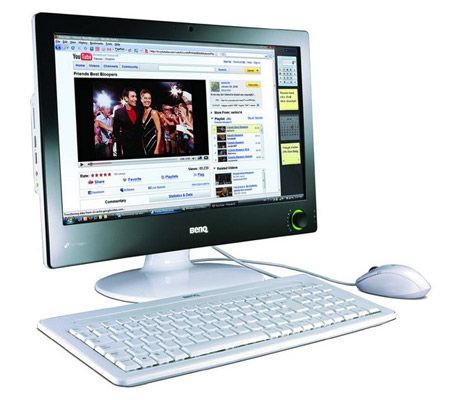
Indeed, BenQ has done just that with the nScreen i91 that we covered yesterday.


AMD, then, is attempting to encroach on the Intel Atom market that successfully flits between low-cost netbooks and nettops. Thinking about it some, AMD's platform is a little better, as it provides more CPU clout and better multimedia features, albeit at the expense of greater power-draw.

Should AMD be able to convince a number of partners that desktop Yukon makes sense, and price it cheaply enough, nettops may not longer be the sole preserve of the Atom.

Would you buy an all-in-one Yukon-powered PC for around £300, or will NVIDIA's ION platform be better for the task? Feel free to comment.


Source : http://www.hexus.net/

AMD/ATI Catalyst Software Suite 9.2 Released

AMD has released the ATI Catalyst Software Suite 9.2 drivers. As always, there are a number of fixes and enhancements to be had. Check out the list of changes in our forums and see if you should download the updated drivers today!


Performance Improvements Catalyst™ 9.2 brings performance benefits in several cases where frame-rates are CPU-limited. Some measured examples are:
• Crysis DX10 gains up to 20%
• Crysis Warhead DX10 gains up to 20%
• World in Conflict gains up to 5%


Source : http://www.legitreviews.com/

Business space planned for AMD spin-offs

WILTON — Developers plan to create small-business space for spin-off firms that would support a computer chip plant at Luther Forest Technology Campus.

The proposal, called Edie’s Crossing, would feature seven two-story buildings of about 20,000 square feet each — for a total of 141,000 square feet — on 20 acres at the southwest corner of Route 50 and Edie Road.

Firms would buy, not lease, space, under a kind of business-condominium concept new to the area. The site is for commercial and light industrial users, not retail.

“Our timing is good,” said David Leman of lemanrealty.com in Saratoga Springs, who represents developers. “It’s really for people who want to own, but can’t afford to go through the process. It’s really come about because of the high price of property.”


Instead of having to find land, buy it and then go through planning reviews, business owners can simply purchase space. A group called 4300 Route 50 Development LLC is doing the project. Leman declined to name partners and whether they’re local.

On Wednesday, shareholders of California-based Advanced Micro Devices voted to approve a business venture with two investment firms based in Abu Dhabi that will allow construction of a microchip plant at Luther Forest. The Malta facility is expected to bring numerous technology-related firms to the area, and the proposed Wilton site would be an ideal place for them to locate.

The first building could be put up this year.

“We’re hoping to break ground in the spring and have fall occupancy,” Leman said. “People could buy, lease or lease with an option to buy. We’re not reinventing the wheel. We’re just bringing it to the area.”

Because of its condominium-style nature, the project requires approval from the state attorney general’s office.

Leman said he can’t discuss pricing or begin marketing the site until the attorney general approves it.

The second story of each building would be reserved for office space. First floors would have “flex” space that all kinds of small business could use — plumbing, electrical, contracting, even graphic supplies or woodworking shops. Some might not be related to AMD at all.

Multiple occupants are expected for each building. The first building would have six to eight first-floor spaces with four to six on the second floor.

Some first-floor sites would have garage bays where firms could put their vehicles. Leman said most small businesses use service-type vehicles. Large trucks and tractor-trailers aren’t expected to use the site.

A public hearing on the proposal is scheduled for 6:30 p.m. Wednesday, March 18 immediately preceding the town Planning Board’s regular monthly meeting.


Source : http://www.saratogian.com/

Tech companies turning to pay cuts to lower costs


While the tech industry has announced thousands of layoffs in recent months, as the global recession spread through Silicon Valley, some local companies are also starting to trim employee pay and benefits to reduce costs.


The moves, once considered unusual, are a way to "share the pain" that might save some jobs, according to executives and economists, although the cuts don't sit well with some workers.


Tech behemoth Hewlett-Packard was the latest employer to announce pay cuts this week, including a 2.5 percent reduction for hourly workers, 5 percent for salaried workers and 10 percent to 20 percent for executives.


Struggling manufacturers AMD and Seagate Technology also implemented broad pay cuts this month, while Applied Materials announced it will institute "multiweek shutdowns" at various divisions — including six weeks over the next six months at its California facilities — in which workers must use vacation or holidays or take the time as an unpaid furlough.


It's difficult to track the extent of pay cuts for rank-and-file workers, but compensation experts say there's been a definite increase in tech companies announcing reductions for top executives, which are often disclosed in regulatory filings.


More than 100 public companies in all industries have reported executive pay cuts since June, compared with just a handful in recent years, said Alexander Cwirko-Godycki, research manager at Equilar, an executive compensation research firm in Redwood City. He said the largest number of those companies, about 40 percent, are in the tech sector.


The reports started to surge after the stock market plunged in November, he said. "We're almost guaranteed to see this trend continue."


Intel and Yahoo have halted employee pay raises. But Palo Alto-based HP, with more than 300,000 employees worldwide, is the biggest to announce pay cuts.


HP announced the pay cuts Wednesday, along with lower contributions to employee 401(k)s, even as it reported a $1.9 billion profit for last quarter. The company said sales grew only 1 percent, with a surge in the services business making up for a big drop in key product segments. Profit fell 13 percent from last year.


Chief Executive Mark Hurd told analysts he expects the recession will continue through the year. In a letter explaining the cuts to employees, he said: "In an environment like this, there's no margin for error and no tolerance for inaction."


Hurd has been aggressive about streamlining operations since taking the helm at HP in 2005, and he told analysts last fall that HP could maintain profits in part by continuing to control spending. Since last summer, the company has laid off 9,000 workers as part of a three-year plan to eliminate 24,700 positions related to its acquisition of the tech-services company EDS.


But HP executives say those layoffs were not tied to the economy. Chief Financial Officer Cathie Lesjak told the Mercury News that HP considered doing additional layoffs in response to the downturn, but decided that pay cuts would cause less harm to employees and less disruption for HP — because more layoffs would require the company to replace workers when business picks up.


HP also says employees may recover some of their lost pay through bonuses if the company meets performance goals — a point Hurd stressed in saying the move gives HP flexibility by making some compensation "more variable" and "more performance-oriented."


Still, the cuts clearly irked some HP employees who contacted the Mercury News in recent days. Several complained that while Hurd is taking a 20 percent cut in his base pay of $1.45 million, that pales in comparison to nearly $24 million he received in a cash bonus last year, plus additional stock compensation.


Other companies have cut pay amid more dire circumstances. Chip-maker AMD, which reported a $1.4 billion loss in its last quarter, said last month that it will lay off 1,100 workers in addition to 2,200 last year. The Sunnyvale company also announced "temporary" pay cuts of 5 percent for hourly workers, 10 percent for salaried workers and 15 percent to 20 percent for executives.


Seagate Technology, which makes disk drives, posted a $496 million loss in its last quarter. Seagate, based in Scotts Valley, said last month it would lay off 3,000 workers and cut pay by 15 percent to 25 percent for executives and 10 percent for management, sales and professional employees. Seagate estimates the pay cuts will save $80 million annually.


Such broad pay cuts will have a ripple effect as employees reduce their own spending, said Stephen Levy, director of the Center for Continuing Study of the California Economy in Palo Alto. But it's difficult to compare the economic impact of pay cuts versus job cuts, he said, noting that laid-off workers will receive unemployment benefits and continue some spending.


"Whatever they do, it's going to be a hit" to the economy, Levy said of local companies that are cutting costs. Reducing pay "is just another way of absorbing losses. Everybody will take a little hit instead of a few taking a lot."


Source : http://www.mercurynews.com/

IBM beefs System x with latest Intel, AMD chips

IBM's high-end System x line has been updated with the faster x64 processors from both Intel and Advanced Micro Devices. IBM has also updated the Opteron processors used in its BladeCenter blade servers as well.


The "Dunnington" Xeon 7400 series chips were launched last September, sporting four-core and six-core variants aimed at four-socket and larger servers. While it always takes server makers some time to qualify new chips on their machines, for whatever reason, IBM took its time getting the Dunnington chips into is System x boxes.


Considering that Big Blue tends to focus on the high-end of the x64 server space, this might have been a contributing factor in the 32 per cent revenue decline IBM posted in the fourth quarter for the combined System x and BladeCenter designs. IBM has moved with a little more spring in its step to get the quad-core "Shanghai" Opterons from AMD into its System x and BladeCenter machines.


The Shanghai chips debuted last November and were updated at the end of January with low-voltage Opteron HE parts and a higher-speed Opteron SE part.


IBM's high-end x3950 M2 server can now use Intel's fastest Dunnington Xeon MP chip, the six-core X7460 chip with 9 MB of L2 cache and 16 MB of L3 cache on the chip running at 2.66 GHz. The x3950 M2 is based on four-socket motherboards. Up to 16 sockets, for a total of 96 cores, can be glued together using IBM's EX4 chipset. IBM will make this faster Xeon MP chip available in the x39650 on March 10. On that same day, the smaller four-socket x3850 M2 server will be available using the quad-core Dunnington E7420 processor running at 2.13 GHz. This chip has 6 MB of L2 cache and 8 MB of L3 cache.


The System x3755 quad-socket server will also be available on March 6 with AMD's standard quad-core Shanghai processors, which run at between 2.4 GHz and 2.7 GHz. The faster Opteron SE and lower-powered Opteron HE parts are not yet available for the x3755, but if you really wanted them, IBM would almost certainly sell them on a special bid basis until it has them formally certified in the boxes.


The quad-core Opteron HE chips in the Shanghai generation are, however, going to be available on March 9 for the company's two-socket LS22 and four-socket LS42 blade servers for its BladeCenter chassis. IBM is shipping the 2.3 GHz Opteron 2376 HE in the LS22 blade and either the 2.2 GHz Opteron 8374 HE or 2.3 GHz Opteron 8376 HE in the LS42 blade.


IBM is also shipping 8 GB DDR2 main memory DIMMs for these blades as well to double up the memory density alongside the doubling up of processing capacity compared to the existing dual-core Opteron HE chips.


While it is hard to say why IBM's System x and BladeCenter sales slumped in the third quarter and then plummeted in the second quarter, one other factor aside from the lack of Dunnington chips and the impending Shanghai chips was the looming "Nehalem" processors from Intel, which are expected to launch before the end of March.


With the Nehalems offering twice the processor performance and somewhere between three and four times the memory bandwidth of current two-socket Xeon machines, this was probably as big a factor as the economic meltdown. HP's ProLiant server line took a similar hit in the fiscal 2009 first quarter ended January 31, with sales down 22.3 per cent to $2.32bn. IBM swooned further, but HP didn't escape market realities either.


Source : http://www.theregister.co.uk/

AMD steps up Folding@Home rivalry with Nvidia

Markham (ON) – AMD’s graphics team today released a new version of its Catalyst driver package, introducing Multi GPU support for the prestigious Folding@Home distributed computing project.

The second update for Catalyst this year, version 9.2, delivers the usual array of performance enhancements as well driver bug fixes for Radeon graphics cards.

For most users, the list of benefits to upgrade to 9.2 may be a bit thin, but those who are interested in participating in the Folding@Home project, a distributed computing project at Stanford University that analyzes the "folding" process of proteins and carries the hope of provide a better understanding of Alzheimer’s disease, may want to have a closer look.

AMD says that the new driver support Multi-GPU configurations for Radeon HD 4000, 3000 and 2000 series cards: Using the driver, each GPU can run a separate Folding@Home client.

The software can be download from AMD’s website.


Source : http://www.tgdaily.com/

Mobile Roundup, Mobile World Congress Edition


This was one of the biggest news weeks of the year in the mobile space thanks to the Mobile World Congress trade show. We saw some really cool handsets (Omnia HD is my favorite), nearly everyone jumped on the App Store bandwagon, and Android had a rather disappointing appearance. But some of the news slipped through the cracks, and I'll cover that after the jump.


I-Mate Shows Off Funky Windows Mobile Phones


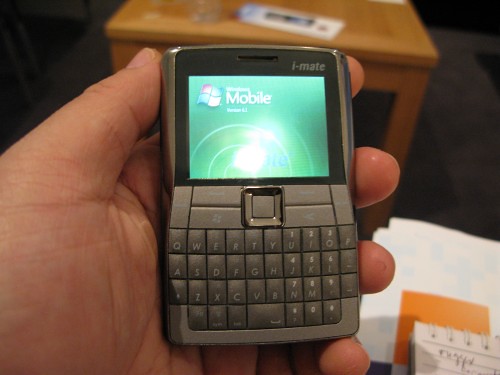
I-Mate showed off a few Windows Mobile smartphones, and I was particularly taken with the Centurion above. It's about the size of a credit card, will run Windows 6.5 for phones, and will have all the connectivity and multimedia options you'd expect from a smartphone. The company says it's the smallest Windows Mobile phone in the world, and I wouldn't doubt it. While the small size is cool in a novel way, I have to wonder how easy it is to hammer out messages on such a small screen. It's expected in the summer for about $550.


The company also showed off the 810-F, which is a ruggedized smartphone that can withstand rain, dust, and being dropped. It has Wi-Fi, GPS, 3G compatibility, and it'll have a full QWERTY keyboard. Look for it in March for about $700.


Another interesting device is the Legionnaire smartphone that's designed to dock with an ultramobile PC. The Legionnaire is a Windows Mobile touch-screen device that looks like an iPhone, and it docks into the laptop-like "Warrior" -- essentially creating a laptop that runs Windows Mobile. It's kind of a similar concept to Celio's Redfly or the failed Palm Foleo.


(Photo Credit: CNET Asia)


Acer To Offer Free Smartphones?


Acer jumped into the smartphone games with its Tempo line, and I wasn't terribly impressed by it. Sure, it looks fine, and the user interface work its doing could be interesting, but it really seems like a me-too product. But an Acer exec told PC Mag it is trying to get these into store for free with a contract.


"We'll make it a very simple, easy interface … and these will retail at zero dollars," said Aymar de Lencquesaing, Acer's smartphone unit president.


Of course, you'll have to sign a two-year contract with a data plan, but "free" is always a good way to move some units, especially during tough economic times. This aggressive pricing plan means Acer is aiming big, and execs said the company wants to be in the top five in smartphones within five years.


(Photo credit: Acer.com)


LG To Bring Out 12-Megapixel Camera Phone


Sony Ericsson caused a bit of a stir by showing off the Idou smartphone, which packed a ton of multimedia features and a whopping 12-megapixel camera. Unfortunately, the handset won't be hitting the streets until at least 2010. But LG Electronics toldTechRadar it would likely have a 12-megapixel camera phone available by the end of the year.


"We'll very much be releasing a 12-megapixel camera phone," said Jeremy Newing, LG Mobile's head of marketing. "It's the same where you're buying a car; if you've got two equal cars then you'll obviously go for the one with the bigger engine."


We're seeing the cell phone manufacturers engage in somewhat of a megapixel race, and the current high-end standard appears to be about 8 megapixels (as seen in the Nokia N86, Samsung Innov8, and others). Of course, I'm more concerned about the sensor, zooming ability, and photo-editing software on board than the sheer number of megapixels.


INQ's 'Facebook Phone' Wins Best In Show


With all the big players at the trade show, guess who won the award for the best handset? It was little-known INQ Mobile for the INQ 1, which is a relatively cheap phone that has strong integration with Web services like Facebook, Skype, Last.fm, and Windows Messenger.


I've been desperately trying to get my hands on one of these guys, as I'm really intrigued with INQ as a company. Its goal is to create affordable handsets that leverage Web services -- for example, you could connect to Facebook and use that as your default contact list. You can hop on Skype to avoid using wireless minutes altogether as well. And when I say it's affordable, I mean it: You can buy the INQ 1 in the United Kingdom for about $115 without a contract.


I'll be eagerly awaiting the next generation of this thing. If they can give it a full QWERTY keyboard, Wi-Fi, 3G, and can get it out the door for less than $200 unlocked, I would probably be fine ditching my BlackBerry.


For the record, it beat out the Nokia E71 (which is an incredible device), T-Mobile G1, BlackBerry Storm, and the LG KS360.


Source : http://www.informationweek.com/

Feeling the crunch in the mobile sector


The dot-com bust of 2001 was devastating not only to the internet industry, but also to global telecoms, as job losses reached about 500,000 and a number of firms were forced under. The effects of that particular recession lasted a long time, and just a short while after the situation appeared to have stabilised itself, the industry stands faced with yet another global economic downturn.


The mobile industry is not alone in feeling the pain of this recession, with very few industries immune, but that offers little comfort to a sector which knows the toughest times may still be yet to come.


Firms like Canada's Nortel have already cracked under the economic pressure, filing for bankruptcy back in January. Ericsson has already had to axe 5000 jobs, Motorola has recently laid off 4,000 employees as part of what it calls an "existing cost cutting strategy" which has already seen 10,000 jobs go, and even Finnish phone giant Nokia has announced layoffs and factory closures.


Financially, the climate is bleak as consumers rein in spending. Motorola recently posted a 25 per cent sequential decline in handset shipments to 19 million units, Sony Ericsson's shipments have slipped by 1.5 million units from 25.7 million to 24.2 million, and Nokia, Samsung and RIM also all shipped less in the fourth quarter than previous analyst estimates.


Back in November, mobile network operator Vodafone announced it would be cutting costs by approximately £1bn pounds, and other operators quickly followed suit as analyst firm Frost & Sullivan predicted 2009 would be "arguably the toughest economic year since 1992".


At Mobile World Congress in Barcelona this week, the downturn was the topic everyone wanted to talk about. Surprisingly, however, the consensus seemed to be that rather than the financial crisis causing the problems in the mobile industry, it has simply acted as a catalyst to an unavoidable situation.


The main reason most point to for this inevitable fall from grace is that mature mobile markets have been under increasing pressure over voice costs, made more acute by additional regulatory pressures. With customers wanting to spend less and maximise their money's worth, mobile carriers are finding they have an uphill battle to win or even just keep customers, which is taking its toll on revenues.


"What we're going through is more of a fundamental economic reset as opposed to a recession and it's going to take some time before economies around the world really re-establish themselves and we get consistent growth again," said Microsoft chief executive Steve Ballmer at the unveiling of Windows Mobile 6.5 at MWC. "No industry is immune to this economic reset, including the computer industry and the mobile industry. And as people struggle throughout the world to really make every dollar count they're going to expect us in the mobile industry to offer devices and services which offer greater and greater value."


Even the emerging markets, which many firms have pinned their hopes on, are not providing much cause for optimism of late. Whereas customers in the developing world may be able to scrape together enough to buy an entry-level, basic £15 handset, firms are discovering those same people are highly unlikely to splash out a further £40 for an upgrade.


In mature markets, too, people are replacing their phones with much less frequency due to longer contract lengths and loyalty incentive programmes. These offer SIM-only contract tariffs, allowing customers to forego a new handset in exchange for reduced usage costs.


So what can the mobile sector do? The answer is far from clear cut. There is talk of carriers temporarily contracting their spending for three to four quarters until the market picks up again, but many also see this as a danger which could result in a spending glut.


There is also much discussion over whether carriers should continue to channel money into new markets, which usually require hefty infrastructure investments, or cut back and focus on markets where they already have an established base. On this, opinions are very much divided, with some analysts saying that a scale back in emerging markets makes sense, while others point out emerging markets are where all the growth is going to be in the future.


Also, a focus on emerging markets does not necessarily have to be as expensive as many believe. Vodafone best illustrates this by frequently transferring its resources from market to market, helping to offset investment costs. When Vodafone decides to roll out a next-generation infrastructure in the mature market, it redeploys its old systems to the developing world. This is a model many seem keen to follow.


Speaking during a keynote about future investment and expansion at MWC, Vodafone's chief executive Vittorio Colao called for more collaboration across the mobile industry as a way of beating the recession.


"We must be smarter in how we co-operate with content suppliers, device vendors and equipment manufacturers," he said. "There is a growing pressure on consumer pricing and an increasing threat of commoditisation."


Clearly, operators will have to make tough decisions about where their capital expenditure goes, especially if they are involved in substantial international investments. Ultimately it will be the smaller, unaffiliated carriers that will face a sterner test than their larger competitors because they are not big enough to raise the capital needed to diversify and effectively compete.


The general mood appears to be that the time is right for significant market consolidation too. Companies like Nokia-Siemens and Alcatel-Lucent may be just the first in a long line of mergers owing to persistent price pressure.


Doubtless the mobile industry will be hard hit by this crisis and job losses will likely reach unprecedented levels. Within this depressing reality, however, some are finding cause for optimism, predicting the crunch may help the industry shed some of its dead weight, streamline itself and push forward.


Source : http://www.vnunet.com/

Nokia, T-Mobile Team For Mobile Content

Nokia and T-Mobile announced a deal to promote and distribute mobile content and Internet services for the Nokia Series 40 platform.

Consumers will be able to browse and download widgets from T-Mobile's catalog and the recently announced Nokia Ovi Store through the carrier's web'n'walk platform. The widgets will be Java-based and will include stocks, weather, and other Internet-based information.


"T-Mobile and Nokia share a joint vision of offering an unparalleled mobile Internet experience to its customers," said Rainer Deutschmann, T-Mobile's senior VP of mobile Internet, in a statement. "The co-existence of our widget gallery with Nokia's Ovi Store ensures customers have access to an extensive range of interesting and relevant Internet services that they can customize according to their personal preferences."

The web'n'walk platform will be launched this spring, and it aims to bring Web-based features normally associated with smartphones to midlevel phones. It will enable customers to customize their home screens to have one-click access to Web services.


The Ovi Store is Nokia's attempt to capitalize on the growing demand for mobile applications and content, which was brought to the forefront by the success of Apple's App Store for the iPhone 3G and iPod Touch. The world's largest cell phone manufacturer is trying to outdo its rivals by expanding its application store to more than just smartphones. Nokia also said it would be implementing location and social networking features into its virtual storefront for mobile programs.


"Nokia Series 40 devices offer a great platform to deliver the Ovi Store experience and once the Ovi Store is available, you'll be able to enjoy the most relevant content from the people and places that matter to you," said Urpo Karjalainen, senior VP of Nokia's operator channels.


Widgets, applications, and mobile programs are enabling road warriors to use their smartphones to be more productive. InformationWeek looked at how the smartphone could ultimately become a replacement for laptops, and the report can be downloaded here (registration required).


Source : http://www.informationweek.com/

Live: Wynonna Judd at Club Nokia


Wynonna Judd (like any good diva, she dispenses with the surname career-wise) knows how to cover the musical bases, and there's no question that remarkable voice of hers can handle country, pop balladry, rocking blues, soul and gospel.


So how is it that as she approaches 45, a milestone she mentioned several times during her first concert of the year at Club Nokia on Thursday, she still hasn't developed into something more than just an impressive vocalist?


Not that it mattered much to the rabid crowd that filled about two-thirds of the 2,300-seat theater. Judging by her remarks from the stage, it doesn't matter to Wynonna either. She said she's quit reading reviews and paying attention to chart numbers, and from now on she's just out to have fun.


Well, most cover bands in dive bars around the world have fun too. But the artists whose songs they're covering are those who forged their passion into an indelible musical identity, like Elvis, Stevie Ray Vaughan, Merle Haggard, Tammy Wynette and the others whose music Wynonna salutes in her latest album, "Sing -- Chapter 1," released earlier this month.


It's not that she can't put a distinctive spin on this stuff. Her gospel-drenched vocal technique is capable of magnificent things. But after Wynonna told the audience she'd be taking them on a musical journey, she proceeded to conduct one of those whirlwind "If it's Tuesday, it must be Belgium" affairs that provided little more than a pit stop at any of her stylistic destinations.


What's missing is a defining musical vision. Alison Krauss, for instance, is another country-rooted singer who generally doesn't write her own material either. She's seven years younger than Judd but has demonstrated in any number of the projects an intensely focused expression of where she wants to take her listeners.


Drawing heavily from "Sing," Judd hopscotched from the barroom blues of Vaughan's "The House Is Rockin' " to the Presley rocker "Burning Love" to a surprisingly unbawdy reworking of the Sippie Wallace-via- Bonnie Raitt cautionary blues "Women Be Wise" to the reflective country lament of Haggard's "Are the Good Times Really Over." Few veered more than millimeters from the original arrangements, unlike Krauss' wholesale reimagining of the songs she chooses.


Through them all Wynonna exhibited the countenance of an athlete who'd just solidly planted two feet after a complicated Olympics routine. But music should be more than gymnastics. It was only when she dipped into, of all things, Foreigner's arena rock anthem "I Want to Know What Love Is" that she truly became absorbed in a song.


The yearning to connect with a feeling that by most accounts has long eluded her in life was tangible and genuinely moving.


With all her talk about the long process of discovering her own identity following her extraordinary successful collaboration with mama Naomi in the Judds, it wasn't until she sang that duo's hit "Grandpa (Tell Me Bout the Good Old Days)" that she seemed truly at home musically.


The rest of the time, she was content to revisit a period of her life when, as she told her fans, "I would go back to my room and sing these songs." Although it's fun, even beneficial at times, to lose oneself in someone else's music, for anyone with Wynonna's obvious gifts, it's better to find yourself in your own.


– – Randy Lewis

Vizio overtakes Sony as No. 2 flat-panel TV seller in U.S.


Oops, Vizio did it again.


The scrappy Irvine television company caused heads to turn in 2007 when it became the No. 1 supplier of flat-panel sets during the second quarter, much to the dismay of more established players such as Sony and Samsung.


At the time, Vizio, led by industry veteran William Wang, was able to exploit a lull in shipments by Sony and Samsung as they prepared inventory for the more important third and fourth quarters. Since then, the company had floated between the No. 4 and 6 spots.


But a report issued today showed that Vizio again upset the TV industry's world order during the last three months of 2008 -- the key holiday shopping season. It snagged the No. 2 spot among the nation's biggest flat-panel TV suppliers, according to iSuppli. The El Segundo research firm said Vizio's rise showed that value-minded shoppers had opted for its sets, whose prices generally undercut the competition.


"This is an indication that in the present tough economic climate, consumers are becoming less brand conscious and prefer televisions that they perceive to have good picture quality and that are less expensive compared to the competition, rather than seeking models with a lot of extra features," said Riddhi Patel, an iSuppli analyst.


Here are the market share figures for the number of TVs shipped in the U.S. for the fourth quarter, according to iSuppli:


  1. Samsung: 20.2%

  2. Vizio: 14.3%

  3. Sony: 13.5%

  4. Panasonic: 10.7%

  5. LG: 10.6%

It's worth noting that the gap between Vizio and Sony is less than one percentage point, which makes it a very close call.


If shipments to Canada are included, Sony vaults back to No. 2, according to DisplaySearch. Last week, that consulting firm placed Sony at No. 2 for the fourth quarter, with 14.2% of the North American market, and Vizio at No. 3 with 12.3%.


One thing on which both research firms agree: The television market, which suffered brutal price cuts during the holidays, will continue to face punishing economics this year. The strain was too great for Pioneer, which ...


... last week announced it would exit the plasma TV business. Though it had less than 3% of the plasma market, according to DisplaySearch, Pioneer commanded respect from custom installers of high-end home entertainment systems. That area was considered very lucrative until late last year.


Dutch manufacturer Royal Philips Electronics made a similar move last year, handing over its U.S. TV business to Japanese manufacturer Funai Electric, which licensed the Philips brand to sell TVs and other electronics in North America.


Other marginal players that lack either a strong brand or enough capital to ride out the storm could also cut bait in the coming months, said Paul Gagnon, an analyst with DisplaySearch. "This year is going to be ugly," he said.


-- Alex Pham

Sony Expands PlayStation Biz Into Latin America

Ps3controller


Sony has announced that the full PlayStation line will now be available in 13 Latin American countries, bringing PlayStation and PSP games, peripherals, and all three of Sony's platforms in an official capacity, with the PlayStation Network digital distribution service following shortly.


While PlayStation fans who reside in Latin America have technically been able to get their hands on PlayStation 3 and PSP for quite some time, doing so typically required relying on import stores and specialty shops. Having an official presence in these nations, alongside Sony's established consumer electronics division, will likely go a long way towards lowering the prices on the hardware and software, and expanding the user base of PlayStation owners worldwide.


Though it's certainly taken them quite some time, this is good news for Sony, and great news for folks who've been eagerly anticipating Grand Theft Auto but won't pay import prices.


Image: wlodi/Flickr


PlayStation Expands to Latin America [PlayStation.Blog]


Source : http://blog.wired.com/

IPL, Sony to sort out operational issues: Modi

NEW DELHI: Clearing the air on the string of controversies plaguing the upcoming IPL T-20 tournament, IPL chairman and commissioner Lalit Modi,
on Friday, said “there is no question of Sony
pulling out” of IPL.


We are jointly working with the management team at Sony to address operational issues, and we are confident we will be able to amicably resolve them to the satisfaction of all parties concerned, he said in a statement, adding the resignation of MSM CEO Kunal Dasgupta would not impact the T-20 event. “It’s an internal matter of Sony Corporation. But the organisation, whether it’s Sony or IPL, is bigger than any individual.”


All sponsors and partners remain resolute in their commitment to IPL and not a single partner has pulled out. ”In fact, we have received lot of offers from potential sponsors willing to pay much more for our properties,” he said.


But Reliance-ADAG’s Big TV has already pulled out of its Rs 137-crore deal with IPL as a ground sponsor, which according to reports, led to Mr Dasgupta’s resignation on Thursday. The IPL tournament has been mired in a series of controversies, including the Big TV-Bharti Airtel sponsorship row, Mr Dasgupta’s abrupt resignation, and speculation about whether MSM may lose broadcast rights of the tournament.


The BCCI has alleged that MSM breached agreements with the cricket board on ‘various fronts’. The cricket board has blamed MSM for Big TV pulling out of the Rs 137-crore ground sponsorship deal. Big TV had objected to rival Bharti Airtel DTH picking up on-air sponsorship. There is speculation that BCCI has made a revised offer to Big TV for sponsorship, though this could not be independently verified.


Mr Modi added that it was incorrect that IPL title sponsor DLF had paid up only 50% of what it had agreed upon in a five-year deal worth Rs 200 crore. He also announced that the Deccan Chargers team had chosen Visakhapatnam as the second venue for holding two of its home games in IPL.


Source : http://economictimes.indiatimes.com/

Sony quietly schedules God of War III for 2009

In a press release sent today, Sony slated its upcoming games, namely Uncharted 2, Infamous, MAG, Heavy Rain, MLB 09, and God of War III, to arrive on PS3 "throughout the year." Though hardly a solid time line for PS3 owners to hold onto, it's the first of any such confirmation for the highly anticipated God of War III.

With little to no information since the game was announced last June, it was believed that Krato's third and final adventure might slip to 2010. If tentative dates are to believed, however, that no longer appears to be the case.

In the same statement, Sony announced a new TV ad for Killzone 2, which arrives in stores a week from the day. "The new ad was rendered entirely in-game," the company said, before adding, "We're very proud that our game engine technology has reached the point where we don't have to resort to software pre-rendering."

Sony was criticized in 2007 for misleading gamers into believing a 2005 trailer, which showed Killzone 2 looking like something out of an Industrial Light & Magic reel as opposed to something coming from a game console.

Despite a healthy lineup of games (detailed here), the PS3 has struggled to gain momentum since its launch in 2006, primarily due to its $400 price tag. Unfortunately for Sony, an embattled US economy couldn't have come at a worse time.


Source : http://arstechnica.com/