Sunday, February 8, 2009

Some Love Facebook '25 Random Things' Fad, Some Hate It

If you are a Facebook user you've probably been "tagged" in what is quickly becoming a Facebook viral fad called "25 Random Things About Me." According to published reports an estimated 5 million of these notes - or 125 million facts - have popped up in the last week on Facebook.


Facebook

In this undated image provided by Facebook is shown a page featuring the social networking site's...


(Facebook/AP Photo)

The way it works is someone tags you (and 24 other Facebook users) and shares 25 random things about themselves. In turn, your are supposed to type up a list of 25 random things about yourself and share them with the person who tagged you and 24 other people. It's a variation of one of those chain letters that required you to forward a missive to 10 people - or else.


While some people love this latest fad, some loath it. Here is a top ten list of reasons I both love and hate the "25 Random Things About Me" fad. Why just 10 reasons, you ask? Because one of the things I hate about the "25 Random Things" list is the list is too long.


LOVE - It's a rallying cry to highlight our individualism in an anonymous digital culture.


HATE - I hate "25 Random Things" lists that use way too many clich?©s, try too hard to be funny, and those whose lists descend into creative narcissism.


LOVE - I love the fact it saved me from having a 30-minute conversation with my co-worker about her babies. Instead I wasted 5 minutes on Facebook reading about them.


HATE - The guilt of knowing I'm just too lazy to ever share 25 random things with my Facebook friends.


LOVE - The delicious irony: We rail


against Facebook for failing to protect our privacy, then take a naked stroll through the town common.

HATE - I hate NOT getting tagged to read a "25 Random Things" list by people I thought were my friends.

LOVE - The voyeur in me loves seeing friends share way too much. It's like watching a text-based train wreck.


HATE - The editor in me that suffers through a list where my friends share way too much boring details - "I love the color brown."


LOVE - I love that it's a perfect way to be fake and pseudo sensitive to impress that special someone that I'm just right for them.


HATE - I hate "25 Random Things" lists because they are a further dumbing down of the way we communicate with each other. What's next, a 25 Random Reasons Why You Should Hire Me cover letter sent to a potential employer? I'm sure this one has already been tried, along with a text message follow up.


Source : http://www.abcnews.go.com/

Why Facebook Isn't Poised to Steal Twitter's Thunder

Last night, Facebook announced a set of changes to its platform that make it easier for third-party applications to exchange data about users' status messages, notes, shared links, and videos.


The more open Facebook's platform gets, the more powerful it becomes for developers to build fun and useful applications with Facebook's data, either onsite or off. However, several pundits have already jumped to the conclusion that greater openness with concern to status updates in particular spells trouble for Twitter, the bourgeoning microblog service that Facebook itself recently courted without success.


No one knows just where Facebook is heading with its platform or whether it's serious about crushing novel new social networking services like Twitter or FriendFeed. It's easy for bloggers to speculate that every incremental change to its platform or feature set is a devious plan to do just this. But let's not get ahead of ourselves, especially when there's a lot to suggest that Facebook has a long way to go before putting any kind of dent in Twitter's growing popularity.


Mike Butcher over at TechCrunch UK has outlined four particular ways in which he thinks Facebook "won't kill Twitter". First off, Facebook has a fundamentally different relationship model than Twitter. On Facebook, you create a simple two-way friendship with someone. On Twitter, you can choose to follow someone and you can be followed, but the following relationship doesn't have to be bidirectional.


Butcher also suggests that Facebook is more interested in preserving ownership over its social graph than Twitter is over its own. And he points out that the replies Twitter users make to each other are usually public.


These are all fine points to make, and the technical differences he spells out certainly make it more difficult for Facebook to recreate the appeal of Twitter. But when it comes down to it, Facebook fails to challenge Twitter with this new platform upgrade because the two companies ultimately serve substantially different behavioral paradigms.


While Twitter and Facebook prompt users with eerily similar questions ¿ Twitter asks "What are you doing?" and Facebook asks "What are you doing right now?" ¿ their users don't answer in the same way. By and large, Facebook users answer the question more faithfully than Twitter users. They actually provide information about what they're currently doing, perhaps because they are prompted with a field that starts with something like "Mark is". And the news feed lists their entries as action items ("Mark is having a bike ride" or at least "Mike likes biking outside") under a tab called Status Updates.


Meanwhile, Twitter users have (by and large) decided to ignore the questioned posed for them. Instead of using the service to post real status updates ¿ i.e. descriptions of what they're currently doing ¿ they use it as a public broadcasting system of sorts. It's an efficient way for them to send out thought trinkets to an often ambiguous crowd of friends and strangers. And with @replies, Twitter morphs into a conversational medium, a big cocktail party where everybody is constantly eavesdropping on everybody else's impromptu conversations.


There are, of course, exceptions to these generalizations. Facebook users do enter random thoughts in lieu of real status updates, and Twitter users do actually say what they're currently doing. But the overlap is rather small, and it's this smallness that undermines any attempt (real or imaginary) on Facebook's part to steal Twitter's thunder. Something behavioral about Facebook's users would have to change, and it's unlikely that these users ¿ who are largely mainstream ¿ are inclined to pick up the tweeting habits of a crowd that consists mostly of early adopters.


Source : http://www.washingtonpost.com/

Leak: Amazon Kindle 2 Pictures and Pricing

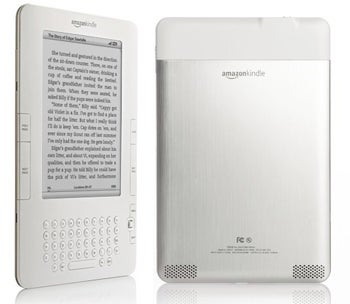
Official-looking pictures and pricing of Amazon's Kindle 2 e-book reader have been leaked on the Internet. The information surfaced on a forum late last night and reveals a thinner Kindle but without the speculated price increase. Amazon is expected to officially announce the Kindle 2 during a press conference on Monday.


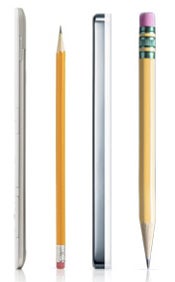
Improvements in the Kindle 2 design bring a thinner footprint, a metal back plate, and stereo speakers. As I mentioned last October, when the first Kindle 2 pictures surfaced, the design cues bring back memories of the first Apple iPods. As usual, the information is purely speculative but the forum reads that Kindle 2 will be available on February 24 for $359.


Just another coincidence? Left: Amazon Kindle 2 marketed as thick as a pencil; Right: Apple iPod Nano (1st Gen) with its pencil counterpart.
Kindle 2 features rounded corners, a black and white screen (apparently the same size as the original Kindle), a 3.5mm headphone jack with a sliding sleep button at the top and a unified QWERTY keyboard under the screen. Smaller navigation buttons are placed on both the left and right sides of Kindle 2. A joystick now replaces the original Kindle scroll wheel.


Amazon's new Kindle will use the same EV-DO wireless technology for over-the-air downloads as the original. Storage-wise, Kindle 2 is said to come with a 2GB on-board memory. Form the leaked pictures, no SD card slot can be seen but my guess is that there will be a way to expand Kindle's memory - maybe a microSD slot.


Do you think Kindle 2 is too pricey for just an e-book reader? Does the device remember you of the first generation Apple iPods? Please let me know in the comments.


Source : http://www.pcworld.com/

Week in Microsoft: the official Windows 7 SKUs

Let's look back at the week that was in Microsoft news:


Six editions of Windows 7: better than Vista, still too many. Microsoft has unveiled the lineup of the editions of Windows 7. There will be six editions this time around as Microsoft has made some improvements to the scheme used in Vista.


Microsoft answers Windows 7 netbook question. Microsoft has finally explained that all editions of Windows 7 will work fine on netbooks.


Windows 7—what's the rush?. Windows 7's beta program is set to be shorter than that of any previous Windows version. We try to answer a couple of questions: How has Microsoft pulled this off? Is this a good idea?


Microsoft: No Ultimate Extras for Windows 7. It looks like the Ultimate Extras which started with Vista will end with Vista. That's right, Microsoft says no to Ultimate Extras in Windows 7 Ultimate.


Scott Guthrie: currently no plans for a 64-bit Silverlight . Microsoft currently has no plans for a 64-bit version of Silverlight 3. The company is considering 64-bit support for the future though.


Signup for SkyBox site launches, dubbed Microsoft My Phone. My Phone is the Windows Mobile version of Mobile Me. That may be confusing, but never fear! The Web site for the beta has launched, and it explains everything well.


Cool video: iPhone and Microsoft Surface mashup. Stimulant has created an interesting mashup between the iPhone and the Microsoft Surface, though the technology works with any phone.


Next phase of Windows campaign to begin during Grammys. The next phase of Microsoft's $300 million campaign will debut this Sunday during the Grammys. It will be more focused on what Windows can offer the end-user.


Microsoft.com moves to Windows Server 2008 R2 beta. Microsoft's homepage is now being powered by Windows Server 2008 R2 beta, a move that the company does with every Windows Server release to show the confidence it has in the product.


Live Search instant answers right in the IE8 search box. Microsoft has rolled out a very interesting feature for the Live Search option in IE8: instant answers right in the search box. Unfortunately the improvement is only limited to the US.


How Bill Gates started off 2009. Here's a quick look at how Bill Gates started off 2009. Hint: there's mosquitoes and letters involved.


You can follow Microsoft news at Ars by using the Microsoft tab at the top of the page, the RSS feed, or Twitter.


Source : http://arstechnica.com/

Mobile Restaurant Ordering (Finally) Hits The App Store

In the last week, a pair of new iPhone applications have appeared on the App Store that put the menus of hundreds of restaurants at users' fingertips. Dubbed GrubHub and CityMint, both applications allow users to order food on the go from online menus, buying entrees, appetizers, and drinks on the fly without the hassle of human interaction.


Our appetites were first whetted three weeks ago, when Chipotle released an official app that let users build their burritos from their iPhone. Unfortunately, the application was pulled down only a few hours after release as a throng of users overwhelmed the app's servers. The Chipotle app is still missing in action, but these new offerings should be able to hold us over.


At first glance, the two applications seem pretty similar: they both let users browse through the menus of restaurants in their vicinity, adding food items to a virtual cart until they submit their orders. But a closer inspection reveals a few key differences.


GrubHub seems to focus exclusively on restaurants that deliver, so most of its options offer fare like pizza, Chinese, and Mexican food (of course, there are some exceptions). CityMint offers a catalog of restaurants that deliver, but it has also partnered with hundreds of popular restaurants to allow for pick-up. CityMint CEO Frank Kuo says that the company sifted through Yelp for the most frequently and popular restaurants in each region, seeking out the ones that would integrate with their system.


As far as usability goes, both applications seem to work well. CityMint's interface is more polished and Apple-like, while GrubHub looks more like a web app (though it is native). But GrubHub has the edge on user reviews, which are displayed alongside each restaurant (CityMint doesn't seem to have reviews integrated at all).


In the end, the app you use will likely come down to which one has restaurants available in your area. CityMint has a larger coverage area than GrubHub and includes a wider variety of locations that offer take-out, but it also costs $2.99 (GrubHub is free). We should also note that there are plenty of web-based applications that offer mobile ordering, but the user experience of these is generally not nearly as good as it is on native apps.


Source : http://www.washingtonpost.com/

Gates Wants You Bitten by the Charity Bug

Bill Gates developed quite the reputation as a pointed pitchman -- if not necessarily a slick one -- during his long tenure as the public face of Microsoft. He certainly didn't disappoint at the TED conference this week, when he unleashed a jar full of mosquitoes on the audience.


The stunt took place during Gates's 18-minute presentation at TED -- short for Technology, Entertainment and Design, an annual conference that gathers many of the world's intelligentsia to discuss everything from world politics to architecture to genetics to charity. Gates, who is now retired from active participation at the software company he co-founded, now works full-time at the Bill & Melinda Gates Foundation.


With his display at TED, Gates was trying to make a point that's long been a key message for his foundation: improving life in underdeveloped nations doesn't start with giving them computers -- it starts with providing lifesaving healthcare. And one of the biggest impediments, he said, is still mosquito-borne malaria, one of the globe's most prolific killers.


"There's no reason only poor people should have the experience," Gates said, as he opened the jar in the packed auditorium in Long Beach, Calif. The laughter from the audience seemed warm but with a touch of nervousness.


Malaria kills an average of one million children a year and infects about 200 million people at any one time worldwide, although the vast majority of those afflicted live in underdeveloped tropical parts of the world, Gates told the audience.


Gates did assure the audience that the mosquitoes he had released in the auditorium were not infected with the parasite that causes malaria. A Gates Foundation spokesperson confirmed that statement and said fewer than ten mosquitoes had been released.


Perhaps a little ironically, TED's slogan, shown on the screen before Gates spoke, read: "Ideas worth spreading."


During his talk, Gates pointed to work the Gates Foundation is funding on developing an effective vaccine for malaria.


"We're funding a vaccine that's going into phase three testing in a couple of months," Gates said.


However, Gates is amenable to low-tech solutions too -- whatever works. For instance, the foundation is also helping to fund the distribution of mosquito nets for children.


"Bed nets can cut deaths by 50 percent," Gates said.


One analyst has been struck by the apparently smooth transition that Gates has made since he retired from Microsoft last June.


"It's interesting how Gates is taking a similar approach to philanthropy as he took to the software business," Rob Helm, research director for Directions on Microsoft, told InternetNews.com. "He's taking a really rational approach and looking for the biggest opportunities that will have the most effect."


"I'm an optimist"


On a par with eradicating malaria, Gates said, is to greatly improve the quality of education -- a goal that the foundation has been working toward in the U.S.


In particular, he lamented the nation's dropout rates: 30 percent of all students drop out of high school, while minorities drop out at a rate greater than 60 percent.


"If you are low-income, you have a higher chance of going to jail than getting a four-year degree," Gates said.


Gates highlighted a group of 66 charter schools that it has been helping fund through what he called KIPP, short for "Knowledge is Power Program." Describing the schools' results as "unbelievable," Gates added. "They take the poorest kids, and 96 percent of their graduates got to four-year colleges."


His closing message was that there are massive problems but they are not insurmountable. "I'm an optimist," Gates said.


Gates and his wife began speaking out regarding the plight of the world's underprivileged more than ten years ago. One of their major accomplishments, the Gates Foundation, came into being in 2000 and remains the best-endowed charity in the world -- despite the recession -- with large contributions from both the Gates family as well as investor Warren Buffet.


Because of their philanthropic activities, Bill and Melinda Gates joined rocker Bono in sharing Time magazine's "Person of the Year" award in 2005 for their charity work.


When he returned to Harvard in 2007 to speak at what would have been his graduating class, he used the occasion to give what passed as a policy speech promoting more philanthropy from the university's alumni.


Gates released what he calls his first Annual Letter -- a report on the foundation's activities -- in January.


Source : http://www.internetnews.com/

E-Books Take Center Stage


It’s been over a year since the Amazon Kindle e-book reader was introduced. And the electronic-ink-based device--which in many ways has transformed the e-book category--has spent much of that time in high-demand: The Kindle was on backorder and sold out during the holidays. Today the Kindle remains on backorder at Amazon's site, by three to five weeks.


Rumor has it that the second-generation Kindle will be introduced at an Amazon event in New York on Monday. Last fall, images purported to be the Kindle 2 surfaced on The Boy Genius Report.


The first-generation Kindle cost $359--when you could buy it. “The Kindle has spurred much interest in the e-book category, not only because of its wireless capabilities, but also because it extends the footprint of Amazon nearly anywhere," notes Ross Rubin, NPD Group director of industry analysis. "It's been one of the first wirelessly connected consumer electronics products to offer fast connectivity at no end-user cost to the consumer.”


That connectivity--an integrated 3G cellular radio and Kindle’s free, Whispernet EvDO wireless connection provided in partnership with Sprint--allows immediate access to the Kindle store for on-demand e-book purchases. Plus, you can use Whispernet to subscribe to and receive blogs and RSS feeds, as well as to browse basic Web sites (text pages, not graphics-heavy sites, so it's handy for quick news and weather checks, or for Wikipedia lookups).


A second-generation Kindle has the opportunity to correct some of the design flaws of the first-gen model--it was too bulky, and handled PDFs and other document files less than gracefully--while making the device more competitive and appealing, given new competition.


Sony, for example, has added backlighting and a touch screen, on its slim second-generation Sony Reader Digital Book PRS-700BC. Meanwhile, Google announced that the 1.5 million public-domain books in its Google Book Search will be accessible via mobile handsets such as the Apple iPhone 3G and the T-Mobile G1. And Amazon has countered by saying that it is working on making Kindle e-book titles accessible on cell phones as well.


Cell phones could be the ultimate mobile e-book reader, by virtue of their portability and ubiquitous nature. “There's a relatively small market for a dedicated device for reading best-sellers, and we're seeing more development on e-book initiatives for the iPhone, with offerings such as Shortcovers and Zinio for the iPhone,” says Rubin. Add in the Google Book Search and Amazon mobile Kindle initiatives, and cell phones could become the next big platform for e-books, beyond the dedicated electronic-ink screens.


Rubin says that one area Amazon could potentially mine is that of electronic textbooks. “There's a tremendous opportunity for the first e-book provider that can tap into the textbook market,” he says. “At the appropriate price, that could transform these devices from frequent-flyer folios into a staple in the homes of students.”


Source : http://www.pcworld.com/

So Many iPhone Apps, So Little Time

Who was it who wrote, in March 2008, just after Apple announced its intention to create an online app store for the iPhone, "You're witnessing the birth of a third major computer platform: Windows, Mac OS X, iPhone"?

Oh, right--that was me.


Anyway, there are now 15,000 programs available on the App Store, and so many more are flooding in that Apple's army of screeners can't even keep up. I keep meaning to write a thoughtful, thorough roundup of the very best of these amazing programs, but every day that I don't do it, the job becomes more daunting. (But don't worry. I'll get around to it.)


For the moment, let's use a single program as a case study. It's one of the most magical programs I've ever seen for the iPhone, and probably for any computer. It's Ocarina, named after the ancient clay wind instrument.

Ocarina

Once you install and open this program, your iPhone's screen displays four colored circles of different sizes. These are the "holes" that you cover with your fingers, as you would the holes on a flute. Then you blow into the microphone hole at the bottom of the iPhone, and presto: the haunting, expressive, beautiful sound of a wind instrument comes from the iPhone speaker.


Different combinations of fingers on those four "holes" produce the different notes of the scale. (You can change the key in Preferences--no doubt a first on a cellphone.) Tilting the phone up or down controls the vibrato.


Ocarina has become a mega-hit. YouTube videos show people playing their favorite songs on this thing with amazing skill. (The "Stairway to Heaven" arrangement, featuring four people playing their iPhones in harmony, is especially memorable.) The software company's Web site, Smule.com, even includes sheet-music pages that show you how to play well-known songs on Ocarina.


Ocarina takes advantages of the iPhone's microphone, speaker, touch screen, graphics and tilt sensor. Incredibly, though, it also exploits the iPhone's Internet connection and GPS, as well.


If you tap the little globe at the bottom of the screen, the screen changes. Now you see a map of the world--and you start hearing the Ocarina performance of one person, in one city (indicated by animated sound waves on the map), who's playing the thing *right now*. Sometimes it's the halting fumbles of a rank beginner; sometimes it's a lovely melody played by someone who's got the hang of it. You can hit a Next button to tune in to another stranger, and another, all around the world.


It's a brain-frying experience to know that you're listening to someone else playing Ocarina, right now, in real time, somewhere else on the planet. (And then you realize that someone, somewhere might be listening to *you*!)


The best part of this story isn't just that someone has turned a cellphone, for crying out loud, into a musical instrument with fantastic expressive potential. It's that hundreds of thousands of people have bought this program in just a few months--for $1 apiece.


Apple, which runs the store, keeps 30 percent of each sale. Even so, Ocarina demonstrates that a programmer can make a staggering amount of money from the iPhone store. It's a crazy new software model that I don't remember seeing anywhere else. It's not a boxed software program for $600, or even a shareware program you download for $25. It's a buck a copy.


The beauty here is that at these prices, there's very little risk in trying something out. How many software programs have you bought for your Mac or PC? Two? Four? Well, the average iPhone owner may wind up installing 10, 20 or 30 programs. In all, according to Apple, iPhone owners have downloaded 500 million copies of these programs. Half a billion--since last July.


There's a lot of gloom in the tech industry (and every industry, for that matter). But even when the economy is crashing down around us, there's still amazing power in a single good idea. And the one on display here--pricing software so low that millions of people buy it without batting an eye--is turning a few clever programmers into millionaires.


Source : http://www.nytimes.com/

Microsoft reveals 'My Phone' backup, sync service

Just hours after Microsoft Corp. accidently launched, then yanked, a Web site promoting its new "My Phone" backup and sync service, the company restored the site and posted more information about the free service.


Late Friday, Microsoft restored the My Phone site, which said the service is "Coming soon." In a separate announcement posted to several Web sites, the company said that more information about the invite-only beta would be given out at the GSMA World Mobile Congress, which opens Feb. 16 in Barcelona, Spain.


Microsoft CEO Steve Ballmer is slated to give a keynote speech at the trade show on Feb. 17.


Earlier, Endgadget Mobile reported that the My Phone site was live at the getskybox.com domain. Later, Microsoft acknowledged the screw-up. "Today, Microsoft's My Phone Web site went live prior to its scheduled debut," the company said, several sites reported. Currently, getskybox.com -- a reference to the "SkyBox" code name of the service -- shunted users to the My Phone site.


According to the information now posted to the site, users of My Phone will be able to back up contacts, calendar appointments, text messages, photos and other information online; share those photos with others; update the information from a computer using a Web-based interface; and use the stored data to restore a phone transfer it to a new device.


Microsoft said it would give each user 200MB of storage space, but warned that only phones powered by Windows Mobile 6 or later would be compatible with the service. In fact, it hedged: "Most phones that run the Windows Mobile 6 operating system are compatible with My Phone service," said the service's site.


Although not strictly billed as a phone-to-PC sync service, My Phone will synchronize Windows Live contacts -- assuming Windows Live has been installed on the phone -- with those on the Windows Live Web site. However, My Phone will not sync contacts, e-mail messages or to-do tasks with an Exchange mail server. Phone data will be backed up to the remote servers automatically once per day, said Microsoft, although users can manually trigger a backup at any time.


My Phone is a potential competitor to Apple Inc.'s MobileMe, which debuted last July but got off to a very rocky start. MobileMe, however, costs $99 annually, while My Phone will be free, said Microsoft.


MobileMe offers considerably more storage space -- 20GB -- and synchronizes e-mail, contact, and tasks between not only Apple's iPhone and a PC or Mac, but also between multiple computers.


Source : http://www.computerworld.com/

Hands on with Apple's MobileMe 1.1

Synchronization is hard. It may sound simple: copy personal information, such as contacts and events, between computers and keep them all up to date. But over the years, we've seen sync programs that don't quite work. I not-so-fondly remember manually deleting hundreds of duplicate contacts from my Palm handheld years ago, and even now, I run into records in which separate companies and individuals were long ago squished together into the same contact.


Apple Inc. has thrown resources at this problem over time, and the latest incarnation, MobileMe, adds the capability to synchronize some data to devices and other Macs lickety-split, the way Microsoft's Exchange Server performs in the corporate world. In fact, Apple calls MobileMe "Exchange for the rest of us." MobileMe definitely comes closer to fulfilling the promise made by the six-year-old .Mac (which it replaced), though it has more than a few rough edges.


With an online service such as MobileMe, I'm writing about a moving target shortly after what turned out to be a disastrous introduction. Not only was MobileMe rolled out at the same time as the iPhone 3G and the iPhone 2.0 software update -- which greatly strained Apple's overwhelmed servers during the first days -- the service also ran into snags days before that when it was soft-launched in advance of its grand debut.


The service was frequently unavailable, and synchronization often didn't work properly. Apple apologized for the snafus and extended all MobileMe subscriptions by 30 days. So, it's possible that the reliability of the service will improve over time.


Getting MobileMe


Existing .Mac subscribers automatically became MobileMe subscribers, and were given a new yourname@me.com e-mail address. New accounts are available from Apple for $99 per year ($149 for a family pack of five licenses), but you can also buy a boxed version that includes a registration code from retailers like Amazon.com Inc. for less.


Upgrading the software on the Mac is oddly tricky, however. Under Leopard, the Mac OS X Update for MobileMe 1.1 doesn't appear in Software Update. You must first open the .Mac pane in System Preferences, and after a minute or so, a dialog appears informing you of the update. Only then does Software Update make it available. According to Apple, this unusual two-step process was required to add the MobileMe imagery to the preference pane; future updates will be available just via Software Update.


Users running Tiger won't see a MobileMe update at all, even though the service works under Mac OS X 10.4.11 (except for Back to My Mac and some sync options, which are Leopard-only features). Although I didn't run into any problems with syncing under Tiger, several reports in Apple's discussion forums advise deleting .Mac preference files if you encounter problems. (In the Finder, go to [home]/Library/Preferences and look for files with "com.apple.dotmac" in the names.)


I recommend making a backup copy of your Address Book and iCal (or Entourage) data before upgrading, just to be safe. To avoid initial data munges, it's a good idea to also use the Reset Sync Data option in the Preference pane.


Quick syncing


In essence, MobileMe is a rebranded .Mac (without, thankfully, the initial period in the name, though the name itself may take some getting used to). The service offers one stellar feature that may convince new people to subscribe: Some information can now be synchronized among devices as it changes.


Under .Mac, data would get updated only during a synchronization event (initiated manually or on an automatic schedule). That left gaps of time where a record could be updated in different ways on several machines, leading to sync conflicts. Now, your data resides in a "cloud" -- which in reality probably resembles less fluffy vapor and more distributed clusters of Apple servers -- and changed records are updated on all devices as soon as possible.


Continues : http://www.computerworld.com/